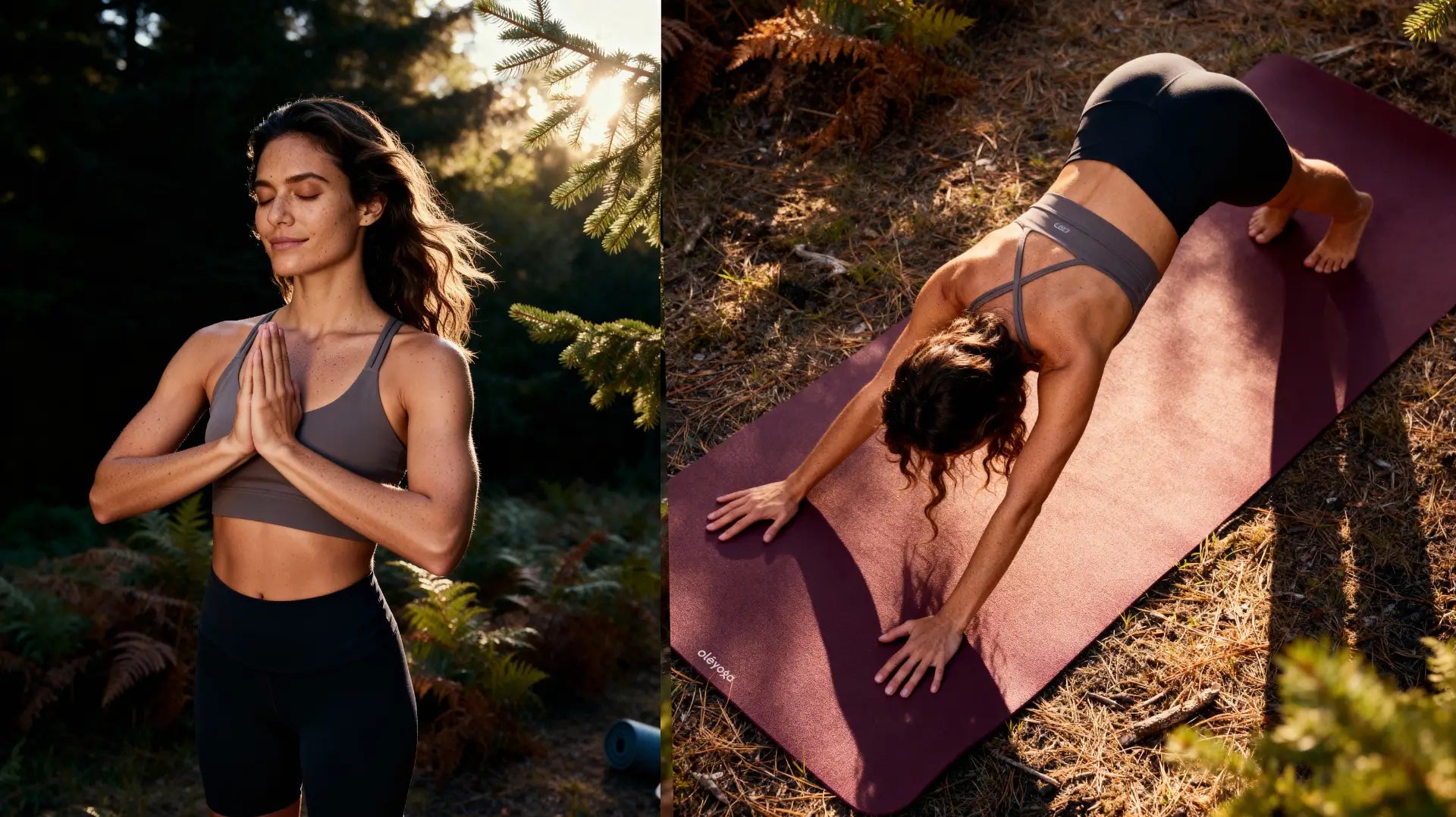

Each style of practice has different needs. Discover which characteristics, such as thickness, grip, weight, size and material, your mat should have depending on the type of yoga you practice, from dynamic styles to restorative sessions.
Vinyasa Yoga
Vinyasa Yoga, like Power Yoga, is defined by dynamic sequences that connect posture after posture with the rhythm of the breath. For such an active style, you need a mat with firm grip to prevent slipping during fast transitions.
A medium thickness is the most recommended. Four millimeters usually offer the best combination of cushioning and stability. If you need more cushioning, you can choose models up to 6 mm. However, keep in mind that the thicker the mat, the less stability you will have in balance and standing postures.
Regarding materials, opt for high traction and non slip surfaces. Natural rubber or polyurethane mats offer excellent grip even with some sweat, which is ideal for dynamic sessions.
As for weight and size, Vinyasa often involves carrying your mat to the studio, so look for a balance between quality and portability. A standard 4 mm natural rubber mat usually weighs around 2.5 kg. There are innovative designs that reduce weight without losing cushioning. For example, the oléyoga Eco Daily 4 mm mat weighs only 1.8 kg thanks to a special core. If your sequences involve large movements, we recommend a mat that is slightly longer and wider, for example 185 × 65 cm, to give you more freedom of movement.
Ashtanga Yoga
Ashtanga Yoga is another dynamic practice, with fixed and vigorous sequences that include frequent jumps known as vinyasas. In this practice, mat traction is essential. You need excellent grip and a resistant material that can withstand daily intensity.
Ashtanga practitioners usually prefer slightly thinner and denser mats, around 4 mm, because they provide stronger connection to the floor and a very stable base for quick transitions and balancing postures.
Anti slip traction is essential. Ashtanga often involves sweating, although not as much as Hot Yoga, so a natural rubber or polyurethane surface will help prevent sliding even with moisture. Some practitioners place a cotton towel on top after finishing the standing sequence to protect the mat if they sweat excessively. The base of the mat should also remain firmly fixed to the floor to avoid slipping.
Durability is another key point. Ashtanga puts the mat through a lot of friction such as daily jump backs and strong pressure on chaturanga. Invest in a dense, high quality material that does not degrade quickly. In short, for Ashtanga look for maximum grip and stability. Choose a thin to medium mat with high density, very non slip and resistant to intensive use, so you can flow confidently through traditional sequences. The oléyoga Eco Daily mat is a favorite among many Ashtanga practitioners.

Hatha Yoga
Hatha Yoga includes the classic and gentle practice that serves as the foundation for many other styles. Hatha classes are usually moderately paced, with postures held for several breaths and a focus on alignment and conscious breathing.
For this style, a medium or thick mat of approximately 4 to 6 mm is recommended. It should provide comfort in static postures without sacrificing too much stability. Make sure the material is dense and non slip because even if the pace is calm, maintaining stability in asanas, especially balance or hand support postures, is still important. A 4 mm natural rubber mat, for example, combines solid grip with a comfortable feel under your feet.
In summary, Hatha Yoga seeks balance between comfort and stability. Choose a medium to thick mat that offers cushioning for held postures and good grip to feel secure in each asana.
Yin Yoga
Both Yin Yoga and restorative yoga are very slow paced styles focused on relaxation and staying in postures for long periods of time. In Yin Yoga, asanas, mostly on the floor, are held for three to five minutes or longer, aiming for deep stretching of connective tissue. In restorative yoga, postures are supported with props such as bolsters and blankets to completely release tension.
In both cases, joint comfort and protection are the top priority because you will spend a long time in contact with the floor. For this reason, a thick mat is the ideal option, around 6 mm. If your usual mat is thinner, you can add a blanket on top during these soft practices to achieve extra softness under your knees, hips or spine. A natural rubber surface is appropriate because it offers decent grip with a soft touch.
At oléyoga we manufacture these mats because we believe they are the most versatile. They work for both dynamic and restorative styles. We like practicing different styles on the same mat depending on the moment. In short, for both Yin and restorative yoga, choose the most comfortable mat possible. Look for a thick, cushioned surface with a pleasant feel that allows you to completely relax without feeling the hardness of the floor.
Hot Yoga (Bikram)
Hot Yoga, including Bikram, is practiced in heated rooms of around 35 to 40 degrees Celsius with high humidity, which causes heavy sweating. In these conditions, the key factor of your mat must be non slip grip even when wet.
The mat suffers a lot in this type of environment due to constant heat and humidity. For this reason, it is common to use a towel on top of the mat to absorb sweat and maintain grip and hygiene. A standard thickness of 3 to 4 mm works well. Extra cushioning is not necessary because Bikram classes include balance and many standing postures. A mat that is too thick may make balancing more difficult. Also, your body is more flexible with heat, which reduces joint discomfort.
For Hot Yoga, we cannot recommend our own mats because constant heat and humidity can accelerate wear, and natural rubber absorbs sweat, so it must dry completely after each use. If you use a natural rubber mat for Hot Yoga or Bikram, we highly recommend protecting the surface with a cotton towel to prevent sweat, humidity and heat from accelerating mat deterioration.
Travel yoga
If you need to take your mat with you when traveling, going on holiday or you simply want to minimize weight and space, portability will be essential. It is almost impossible to find a mat that is non slip, cushioned and lightweight at the same time.
Travel mats are often thinner, around 1 to 3 mm, and made with lightweight materials so they can be folded or rolled using very little space. By reducing the thickness so much, cushioning is sacrificed. These travel mats are not designed for intense daily practice but rather for temporary use on soft surfaces, such as grass, sand or carpet, or on top of studio mats.
In our search for the most sustainable and versatile mat possible, the oléyoga Eco Daily mat includes a recycled rubber core that reduces weight by nearly 50 percent compared to conventional natural rubber mats. A typical rubber mat weighs around 3 kg and ours weighs 1.8 kg. I personally traveled with it to India when I trained as a yoga teacher and I use it for all types of practices in different studios. It is not as light as travel mats that weigh around 0.5 kg, but the comfort and performance it provides is incomparable to any other mat.
______________________
oléyoga is a sustainable yoga mat brand made from natural rubber and free from plastic based materials. Engineered for strong grip, durability and reduced environmental footprint, our mats encourage an ethical and mindful approach to yoga.