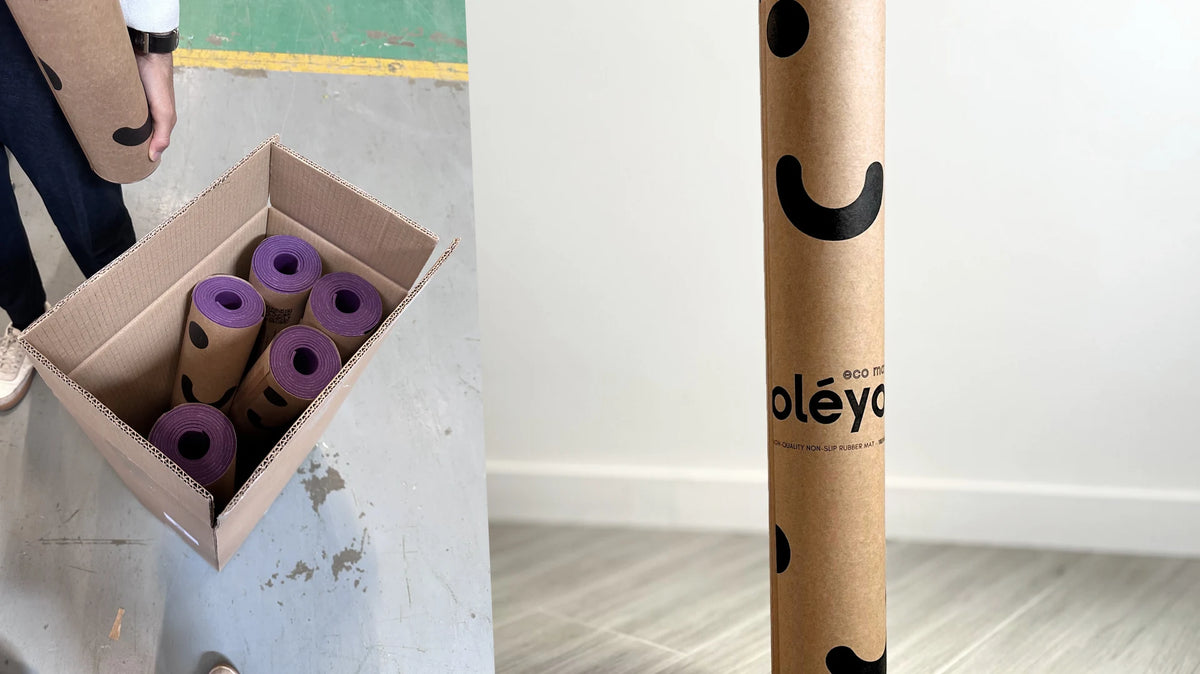

Natural rubber yoga mats
Where natural rubber comes from, how it compares to TPE, PVC and cork, why it smells at first, what a latex allergy means, and how long one really lasts.
Natural rubber comes from the sap of the Hevea brasiliensis tree, tapped without felling it. As a yoga mat it gives the best grip of any common material and breaks down at the end of its life instead of lasting for centuries. It also weighs more than plastic, carries a smell for the first weeks, and contains latex. All of that is below.
The tree is worth more alive than felled. That is the whole argument for the material.
Where natural rubber comes from
Tapping is a cut in the bark. The tree keeps growing and keeps being tapped for decades, and that is the structural difference from every synthetic alternative: the raw material is renewable and nothing is cut down to get it.
What reaches a mat is vulcanised rubber, heated with sulphur so the polymer chains cross-link and the material stops being sticky and starts being elastic. It is well understood chemistry with decades of literature behind it. Vulcanising is also why a natural rubber mat is not compostable in your garden: it biodegrades, but over years and in industrial conditions.
Recycled natural rubber, which is the part nobody offers
Our mat is 100 % natural rubber, and the core is made with up to 85 % recycled natural rubber. Both statements are true at once: recycled rubber is still rubber, so nothing is diluted with plastic to achieve it, which is what usually sits behind a recycled claim in this category.
It matters because the alternative is virgin material every time. Rubber that has already been tapped, vulcanised and used once, going back into a new mat, is the only point in this product's life where the loop actually closes. How the recycled core sits under the grip surfaces is in how the mat is built.
How it compares to TPE, PVC and cork
| Material | Grip when damp | End of life | Origin |
|---|---|---|---|
| Natural rubber | Best | Breaks down in roughly five to ten years | Renewable, tapped from a living tree |
| TPE | Moderate | Recyclable where facilities exist, not biodegradable | Petroleum |
| PVC | Poor once wet | Neither. Over two hundred years, releasing additives | Petroleum plus plasticisers |
| Cork | Improves when damp | Biodegrades | Renewable, harvested bark |
One correction worth making, because it is repeated everywhere: TPE is not biodegradable. It is a thermoplastic elastomer made from petroleum. It can be recycled where facilities exist, which is genuinely better than PVC, but “eco” and “biodegradable” are not the same claim, and the second one is not true of TPE. We go through what TPE actually is and where those claims come from separately.
Cork is the interesting comparison, because it behaves in the opposite way to rubber: it grips better the more you sweat. We put the two side by side here, including the detail that most cork mats have a rubber base.
We do not sell TPE, PVC or cork, so take this table for what it is, and check it against anyone who sells all four.
Does a natural rubber mat smell?
Yes, at first. It is the volatile compounds left over from vulcanising, and it is strongest the moment the mat comes out of its wrapping. It fades over the first weeks of regular use, faster in a ventilated room.
Do not leave it in the sun to speed this up. It is the most common advice online and the one piece that will damage the mat: UV and ozone degrade rubber and will crack the surface. Shade and airflow, not sunlight. There is more on why the smell happens and what actually shortens it, including when a smell means something is genuinely wrong.
What a latex allergy means for a rubber mat
Natural rubber contains latex. If you have a diagnosed latex allergy, talk to your allergist before buying any natural rubber mat, including ours.
We are not going to tell you it is hypoallergenic, because that is not true and you will see it claimed. What is worth knowing is that two different things get called a latex allergy:
- Type I, a reaction to the proteins in the sap. It is the serious one.
- Type IV, a contact dermatitis triggered by the accelerators used in vulcanising.
They are different problems with different answers, and only a specialist can tell you which one applies to you. We explain the distinction and the latex-free alternatives in our guide to yoga mats and latex allergy.
Contact with a mat is dry skin on hands and feet, not mucous membrane, which is not the same exposure as a surgical glove. That is context, not clearance. The decision is a medical one.
How long it lasts, and what happens then
Cared for properly, a natural rubber mat lasts years. Fewer than a plastic mat, which is the honest trade-off for the grip. What ends its life is not a date but a signal: the top surface polishes smooth and grip starts to go, first in the spots where your hands land. Daily intense practice gets there sooner; twice a week takes much longer.
The end of life is the part nobody writes about. A vulcanised rubber mat will not compost in your garden and should not go into household recycling, because kerbside streams have nowhere to put it. What it does do, unlike PVC, is break down in roughly five to ten years rather than outliving you.
Before that point it has a second life:
- Under a doormat, where the grip is the whole point.
- As knee padding for gardening.
- Cut up as furniture grips or drawer liner.
We intend to take worn out oléyoga mats back into our own production over the coming years. That scheme does not exist yet, and until it does we would rather say so than announce it.

Why we make ours in Europe
Almost every mat sold in Europe is manufactured in Asia. Ours is made in Europe, and the reason is not romantic: it is the shipping leg. A mat made on the other side of the world travels most of the way around it before reaching a European mat bag, and no amount of sustainable raw material offsets that on the invoice or on the carbon.
It also means we can see the factory. The rubber content, the dyes and the vulcanising process are things we can ask about and answer, which is harder at four subcontractors' distance.
One thing that would be easy to round up and that we are not going to: the rubber itself is not local. It is tapped where the tree grows, so it travelled a long way before any of this applied to it, and we hold no FSC certification on it.
Frequently asked questions
Is natural rubber the same as latex?
Latex is the raw sap; natural rubber is what it becomes after vulcanising. A rubber mat contains latex proteins, so yes, it matters for an allergy.
Is it vegan?
Yes. Tapping does not harm the tree and no animal product is involved.
Why is it heavier than a plastic mat?
Density is what makes it grip and stay put. Our 4 mm mat weighs 1.8 kg, against roughly a kilo for a comparable TPE mat. An expanded core is what keeps it at 1.8 kg rather than the 2.5 kg a solid rubber mat of the same thickness would weigh. It is still a real trade-off: better grip, worse to carry.
Can I use it for hot yoga?
We do not recommend this mat for hot yoga. Sustained heat and heavy sweat are hard on natural rubber, and there are surfaces built specifically for that practice.
How do I clean it?
Water and a little mild soap on a cloth, then air-dry flat in the shade. No alcohol, no essential oils and no dishwasher detergent: all three attack the surface.
Can you travel with a natural rubber mat?
Within reason: at 1.8 kg ours is a deliberate carry rather than a featherweight, honest for a car boot, a weekend or a retreat. The full reasoning is in a natural rubber yoga mat for travel.
Our natural rubber mat
The Eco Daily is 4 mm of 100 % natural rubber, 185 × 65 cm, reversible, made in Europe. If the material argument above is what you were looking for, see the mat.
More on the same question: our full comparison of yoga mat materials and how long a natural rubber mat really lasts.
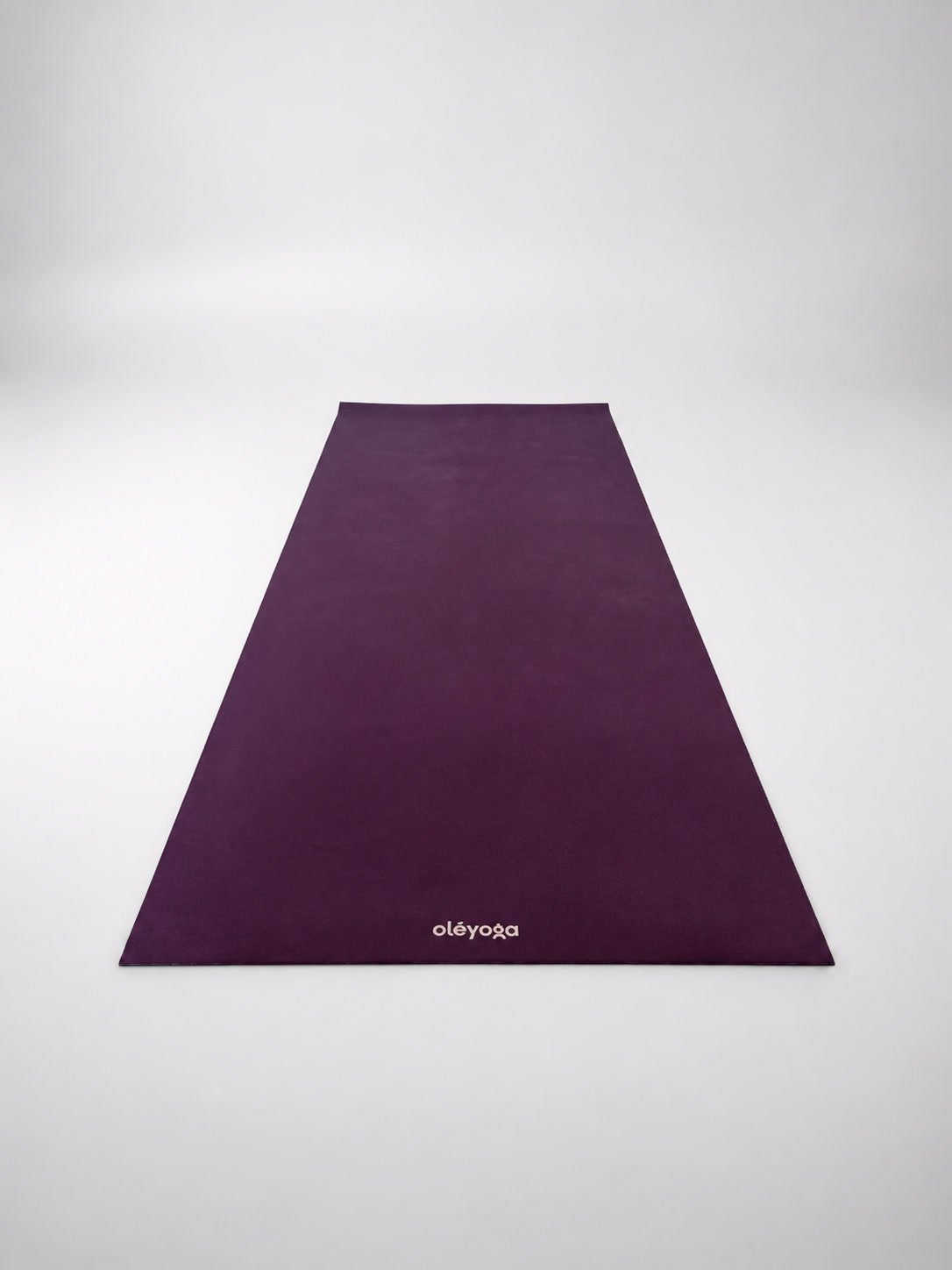
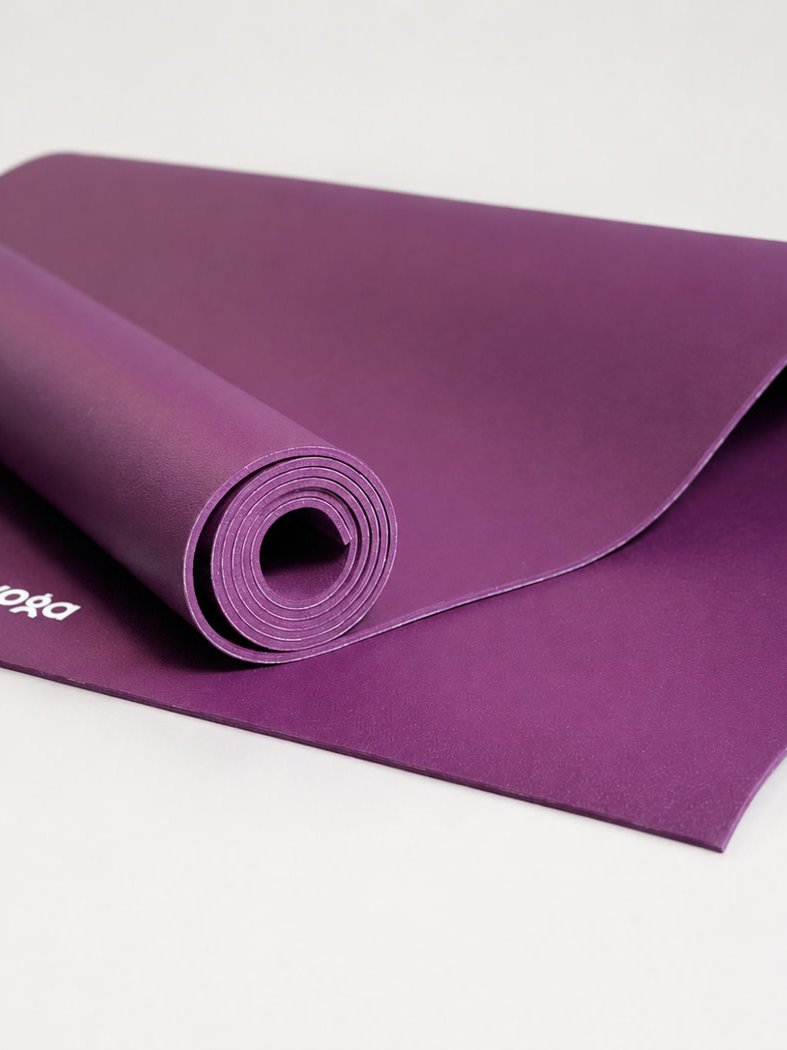
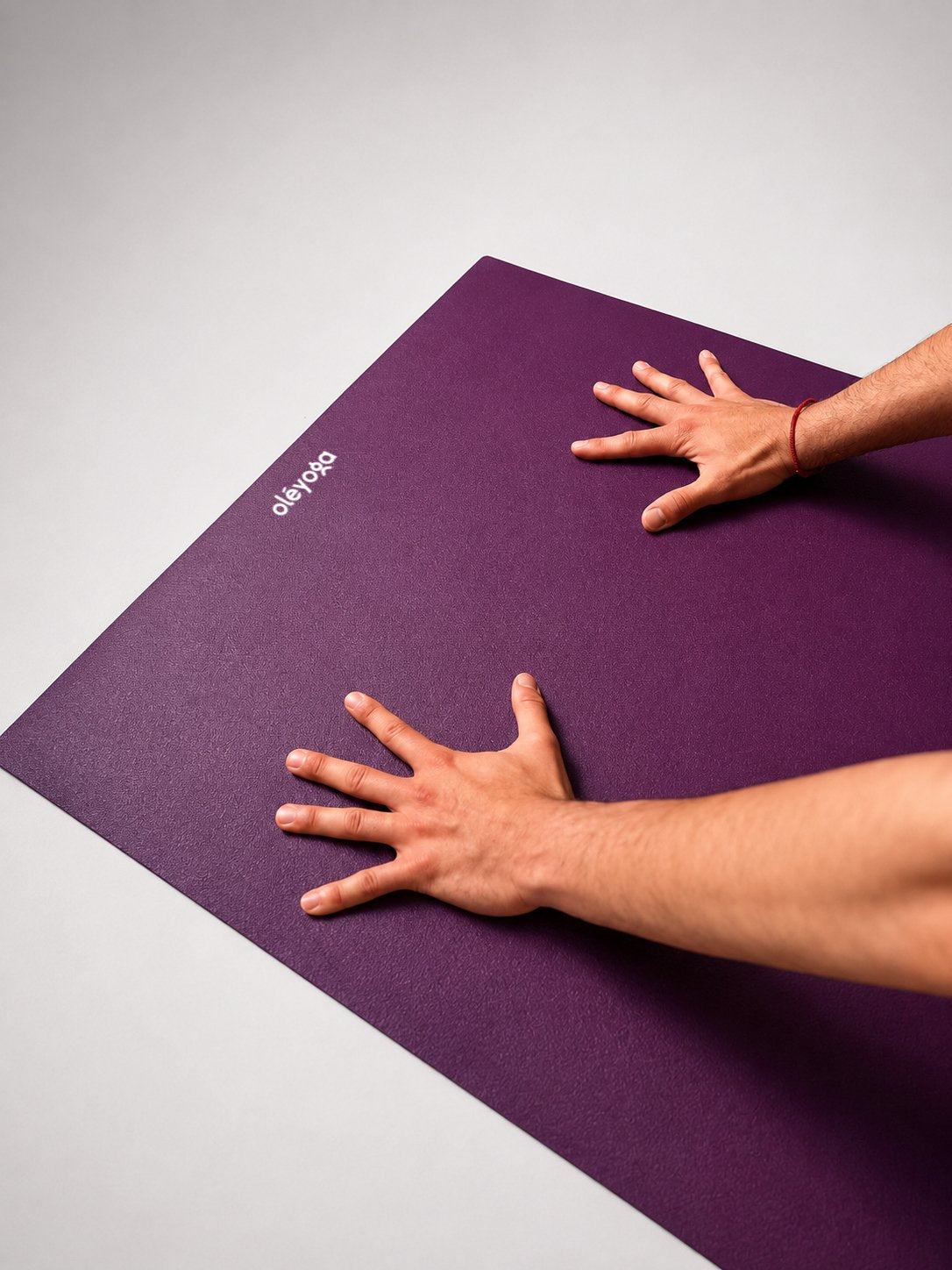
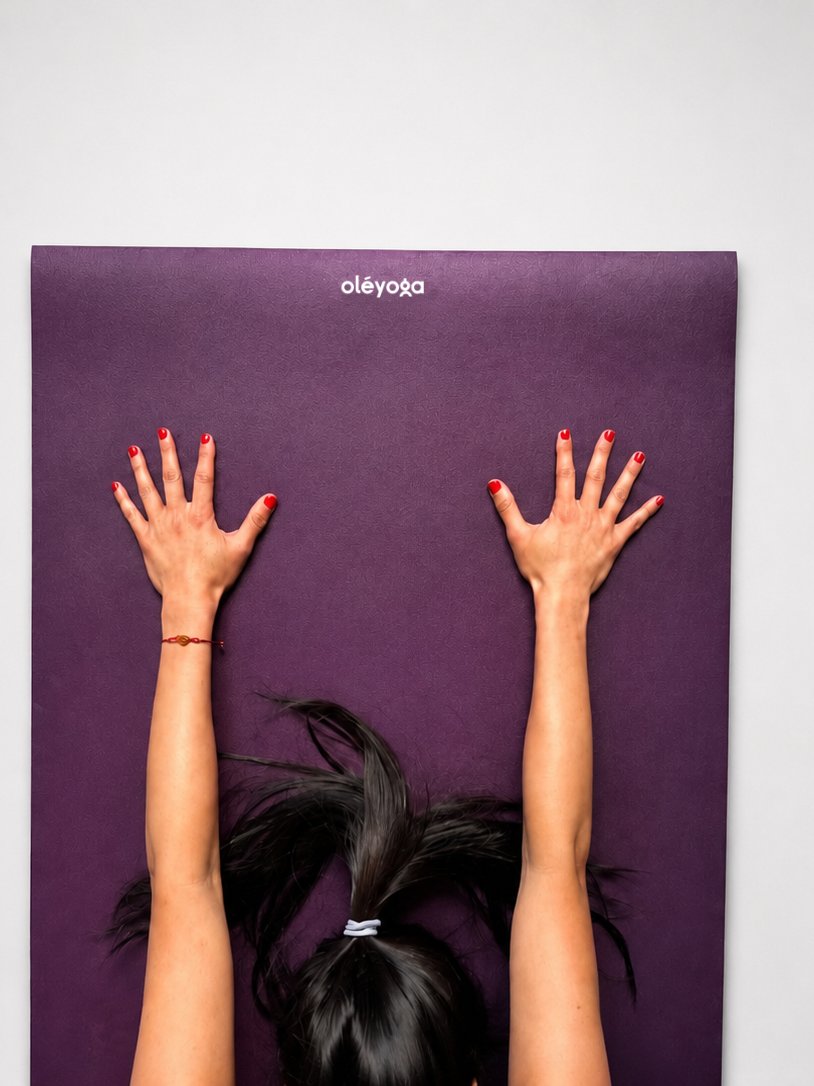
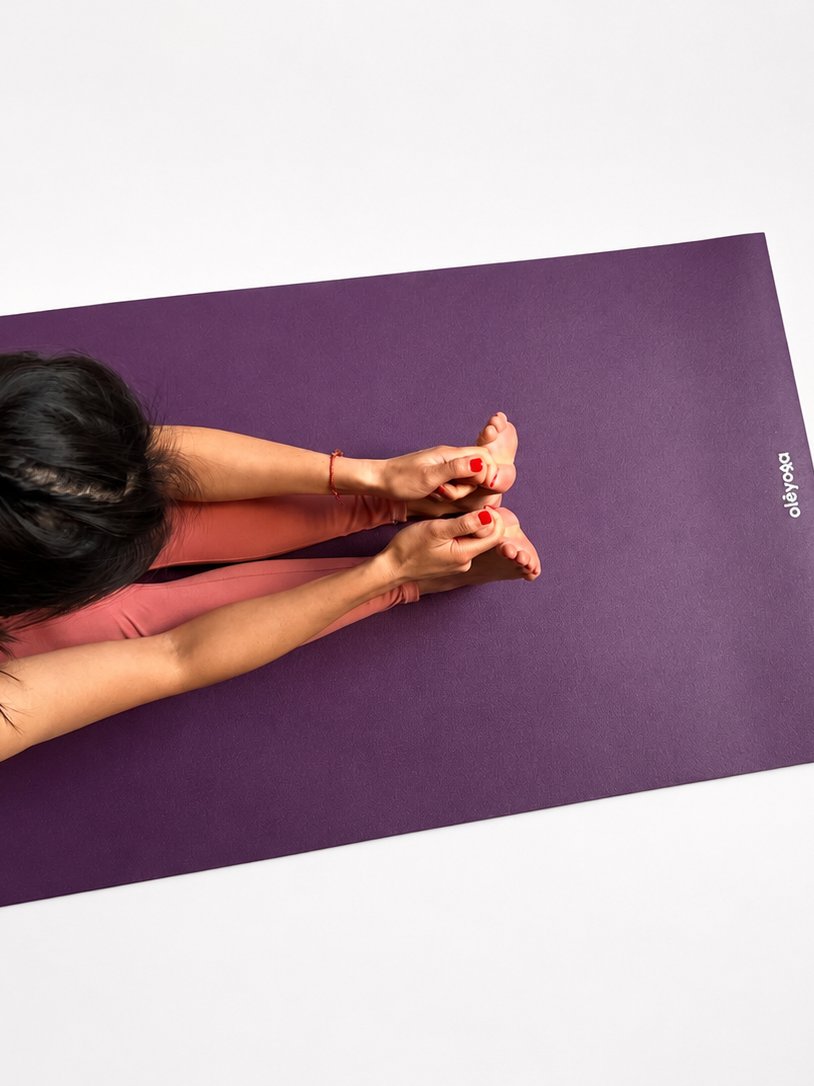
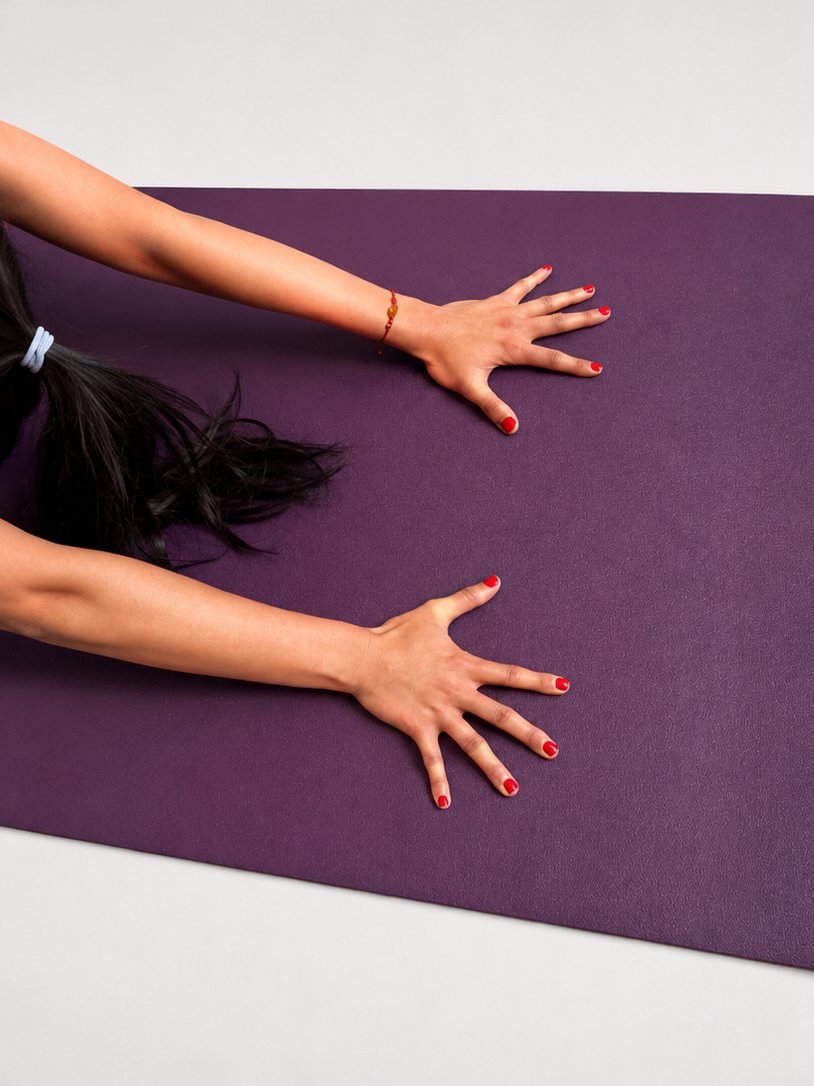
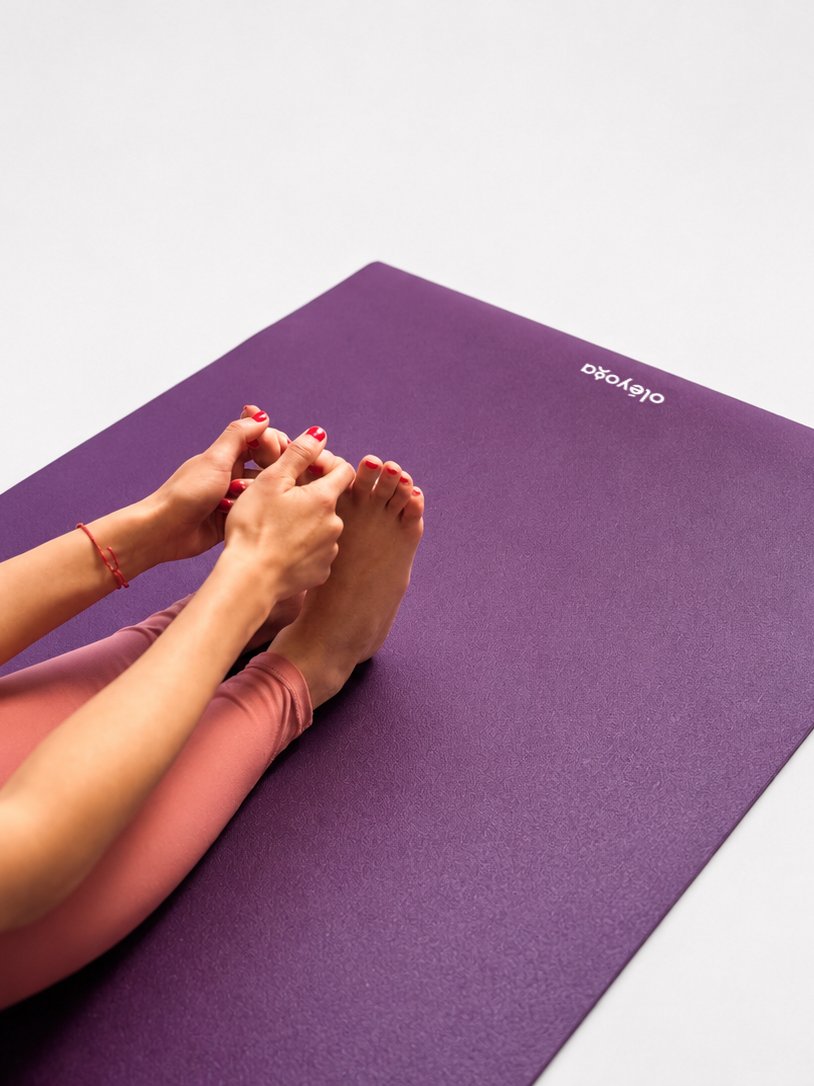
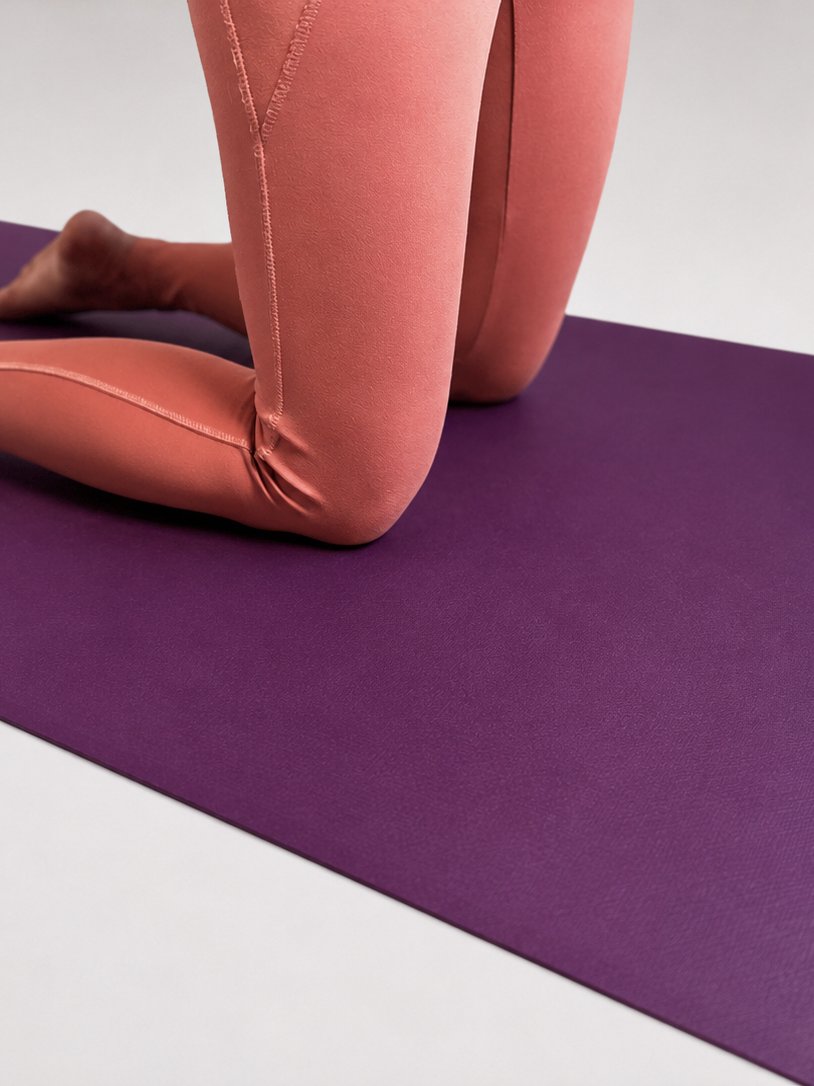
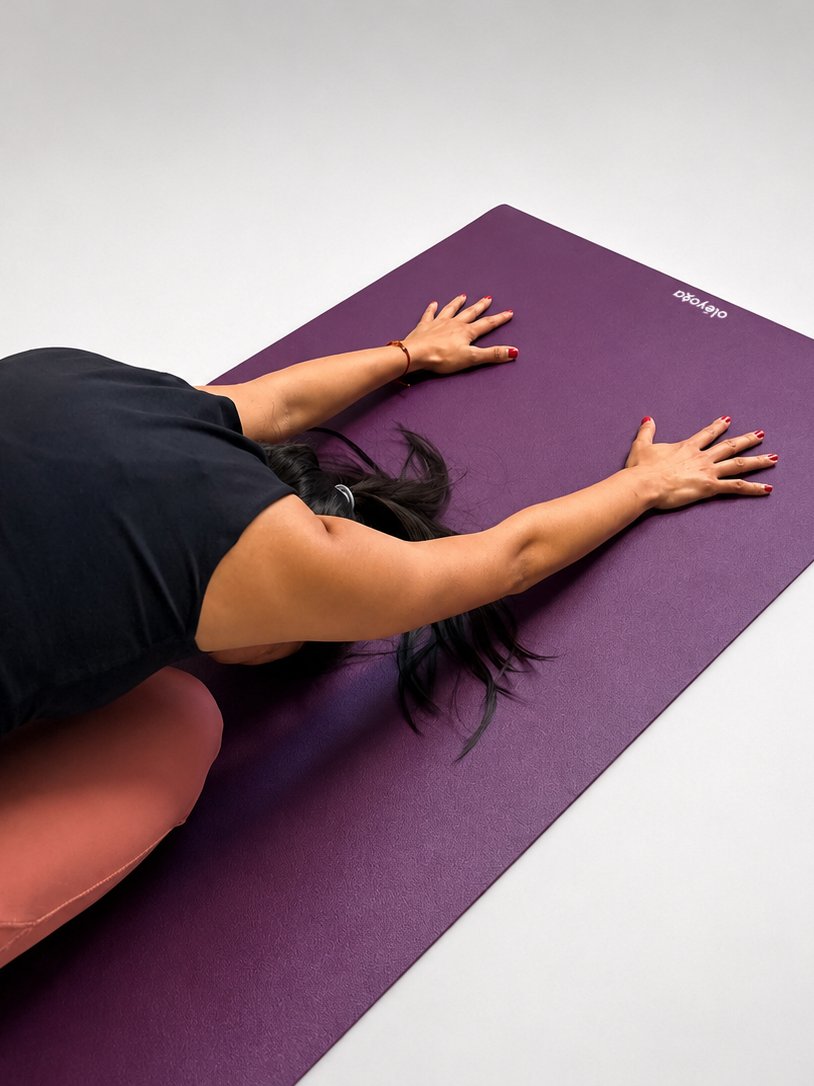
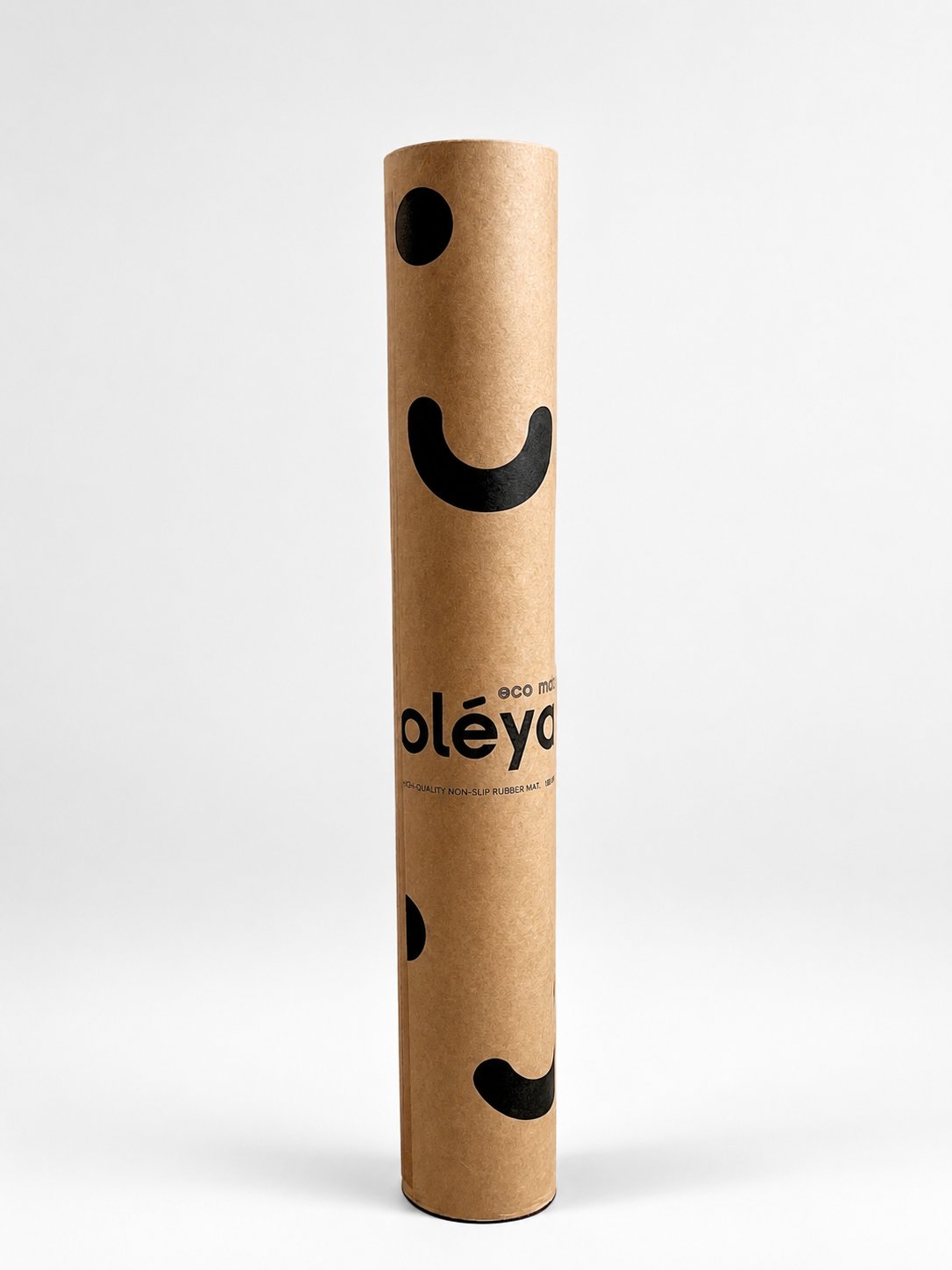
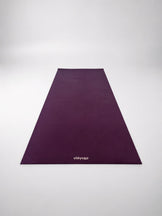
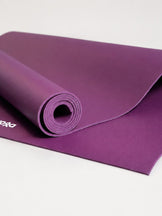
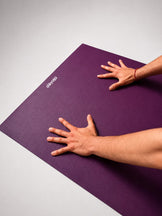
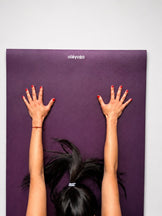
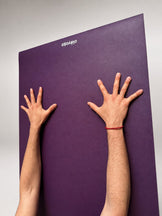
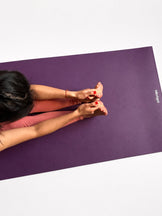
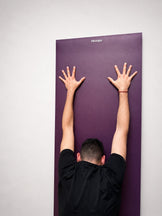
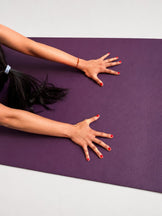
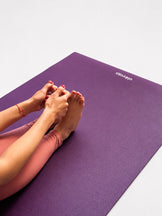
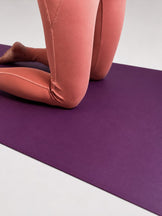
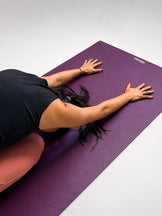
Steady natural-rubber grip from the first practice. Made in Europe · 4 mm · 1.8 kg · reversible · OEKO-TEX®.
One yoga session is all it takes to feel it: no more slipping. Made in Europe from 100% natural rubber with a non-slip technology, for a steady, mindful practice.
Store it. Roll it. Take it to class or home. It is reversible and weighs just 1.8 kg.
Join +1000 yogis already practicing on a more sustainable model of yoga.
More on the same question
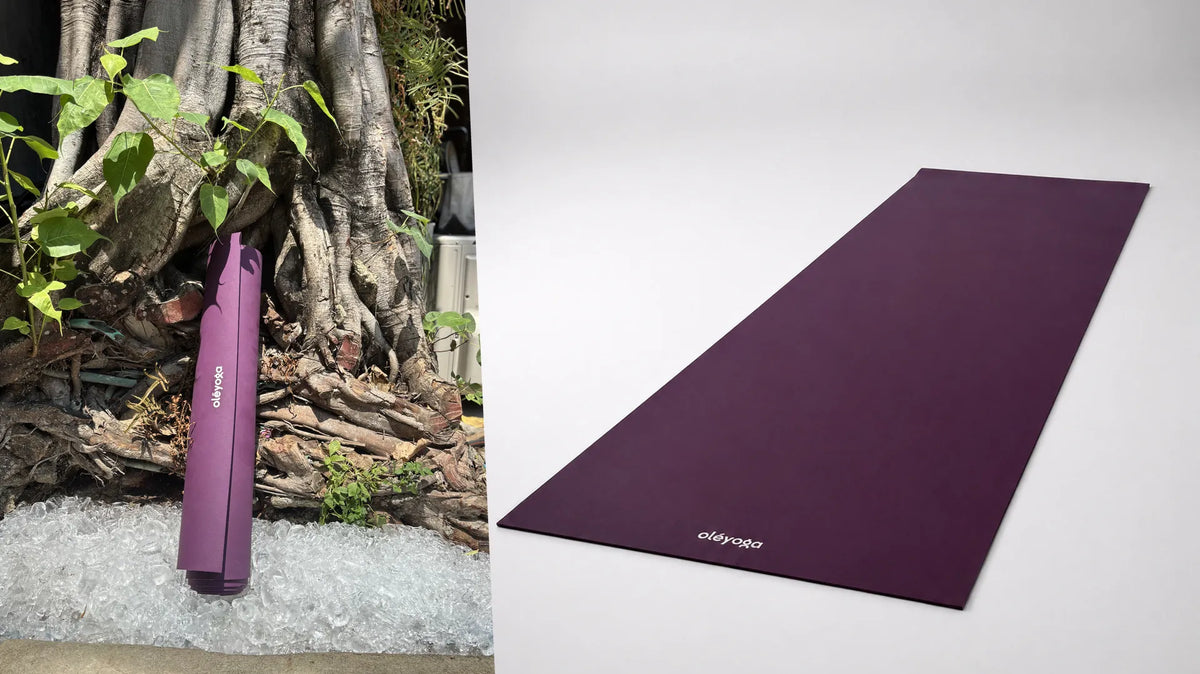
What to do with an old yoga mat
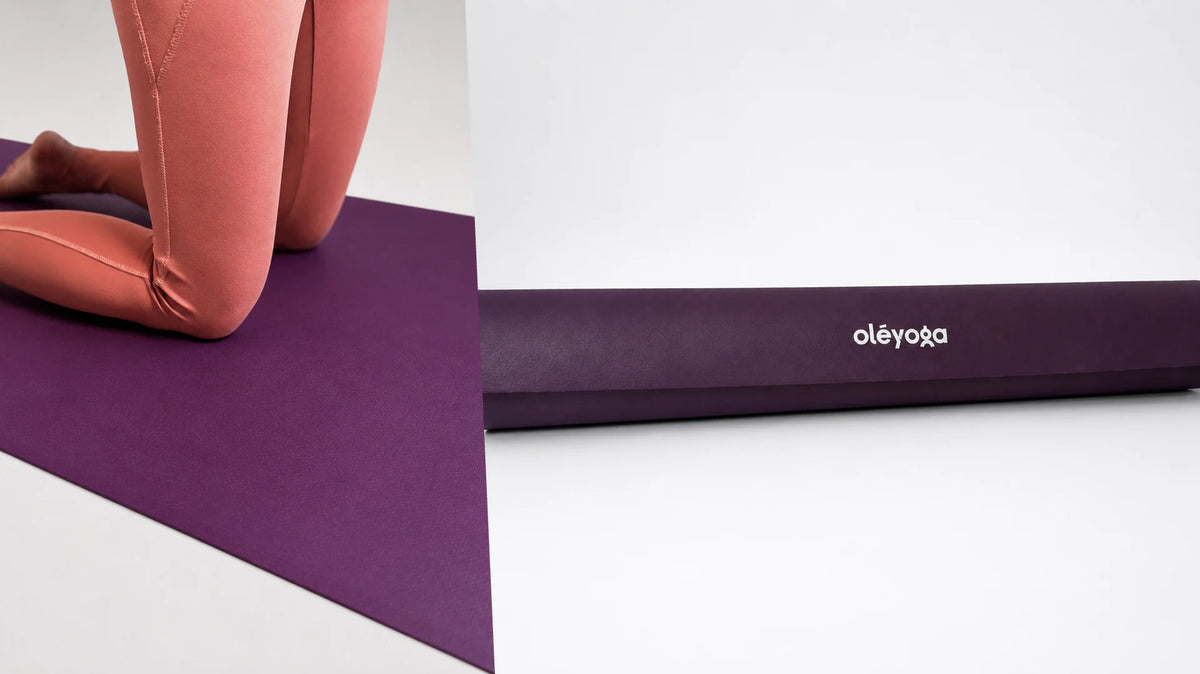
How to clean a natural rubber yoga mat