
The best yoga mat material depends on your practice, how you carry the mat and how you care for it. Compare the surface that touches your hands, the base against the floor and any supporting layers. A material name alone does not establish grip, lifespan or environmental impact.
Yoga mat materials: construction and what to check
| Material | Typical construction | Before choosing |
|---|---|---|
| PVC | Polyvinyl chloride, with a formulation and surface that vary by model. | Check the stated composition, cleaning instructions and grip in your practice. |
| EVA | Ethylene-vinyl acetate foam. | Compare actual weight and how the cushioning feels under hands and knees. |
| NBR | Synthetic nitrile rubber, often used in cushioned exercise mats. | Check thickness and firmness for standing balance as well as floor exercises. |
| TPE | Thermoplastic elastomer; this describes a family of formulations. | Ask about the specific model. The label alone does not establish recyclability. |
| Natural rubber | Rubber-based surfaces or bases, sometimes combined with other layers. | Check the full construction, weight, care instructions and intended use. |
| Cork or jute | A cork surface or jute fibres combined with a supporting material. | Read what the base and binders contain; the surface is only part of the mat. |
| PU on rubber | A polyurethane surface over a rubber base. | Check the surface care instructions and the practices recommended by the manufacturer. |
This table explains construction; it is not a laboratory ranking. We have not tested these materials under a single comparative protocol. Weight and durability must be checked for each finished model, not assigned to every mat made from the same material.

Choose for the way you practise
For daily practice, compare comfort, stability and grip under the conditions you actually use. For travel, check the stated weight and rolled size. For heated classes or heavy sweating, choose a model specifically intended for those conditions. Separate slipping under your hands from movement of the whole mat on the floor.
Understand dry grip, sweat and floor stability
What is inside the oléyoga Eco Daily?
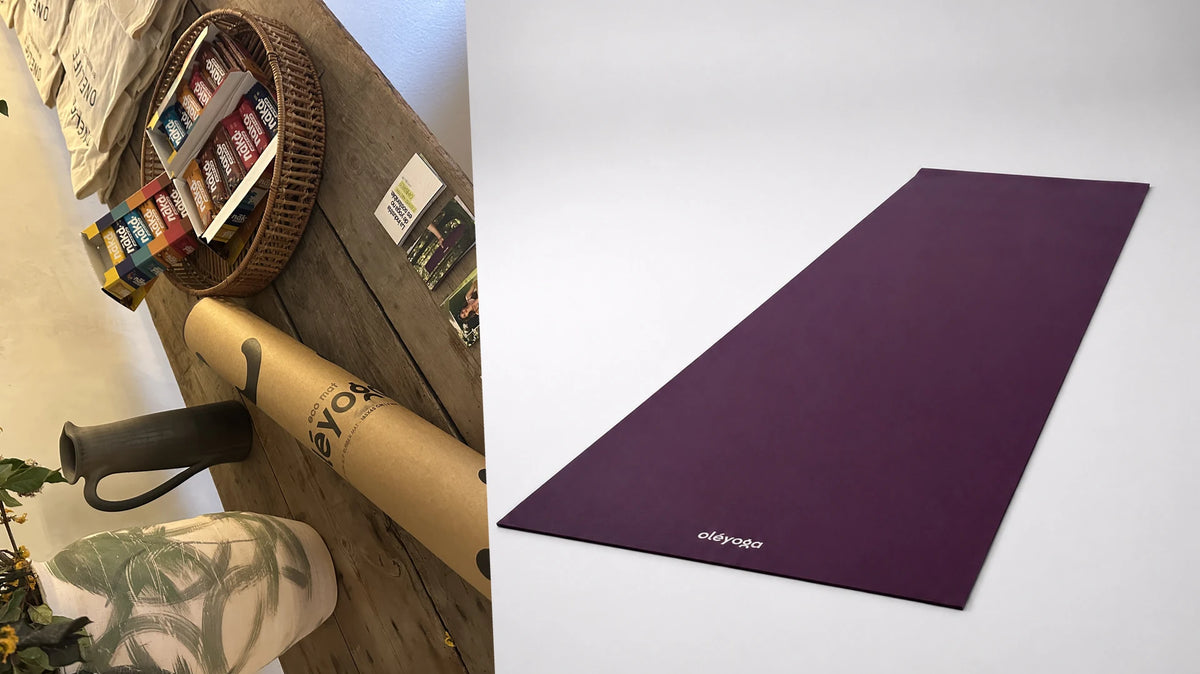
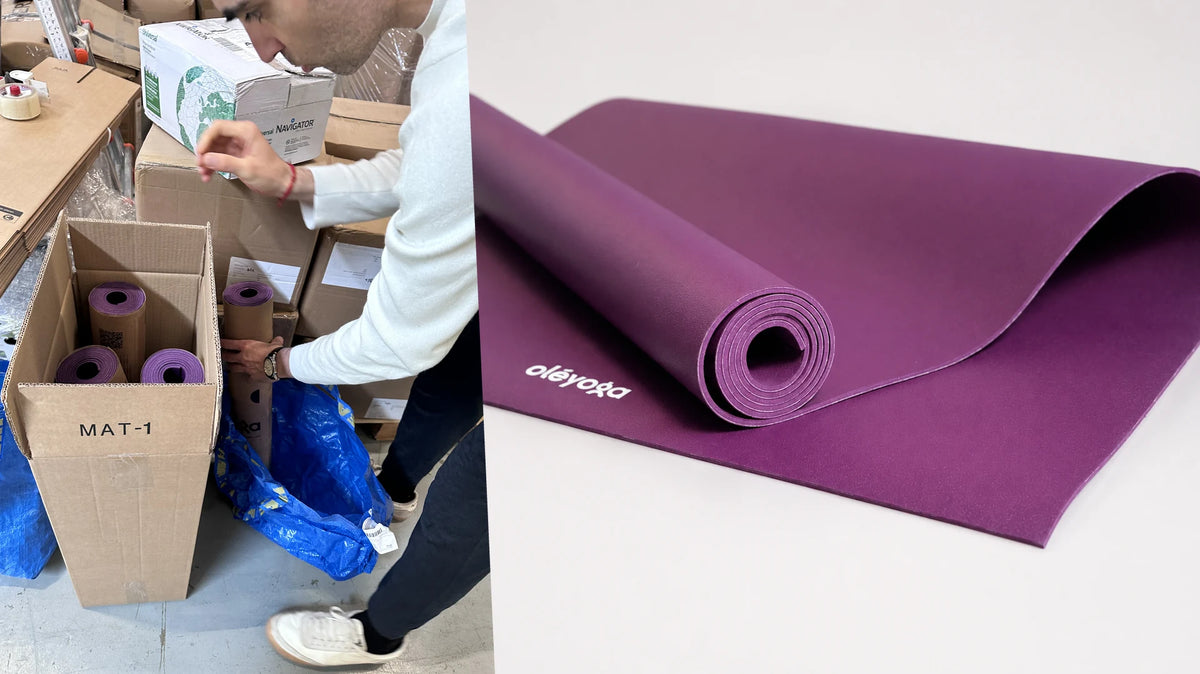
Eco Daily has natural rubber surfaces, a core containing up to 85% recycled natural rubber and a thin structural cotton layer. That percentage refers to the core, not the whole mat. It is made in Europe, reversible, 185 × 65 cm, 4 mm thick and weighs 1.8 kg. We recommend it for everyday Hatha, Vinyasa and Ashtanga at room temperature; we do not recommend it for hot yoga or heavy sweating.
Read the natural rubber guide and its practical limits
Care and end of life are part of the comparison
Follow the instructions for the particular surface. A renewable raw material does not mean the finished mat can go in home compost. We do not give a fixed decomposition time for Eco Daily or claim that every local recycling service accepts it. Keep a mat that still works, reuse it where appropriate and check local disposal options.
Cleaning and storage for Eco Daily
See the product and the available evidence
We sell Eco Daily, so this is a guide from a manufacturer. Our construction page explains the layers; the teacher videos share individual experiences, not controlled comparisons or guarantees of grip.
Explore the construction · Watch the original teacher videos

Check Eco Daily specifications, price and availability
If you decide on natural rubber after comparing materials, check whether any yoga mat discounts are available on Eco Daily and review their conditions.
To see how these materials appear in finished products, our comparison of ALO Yoga mats and oléyoga Eco Daily looks at PU surfaces, natural rubber and the declared construction of each model.