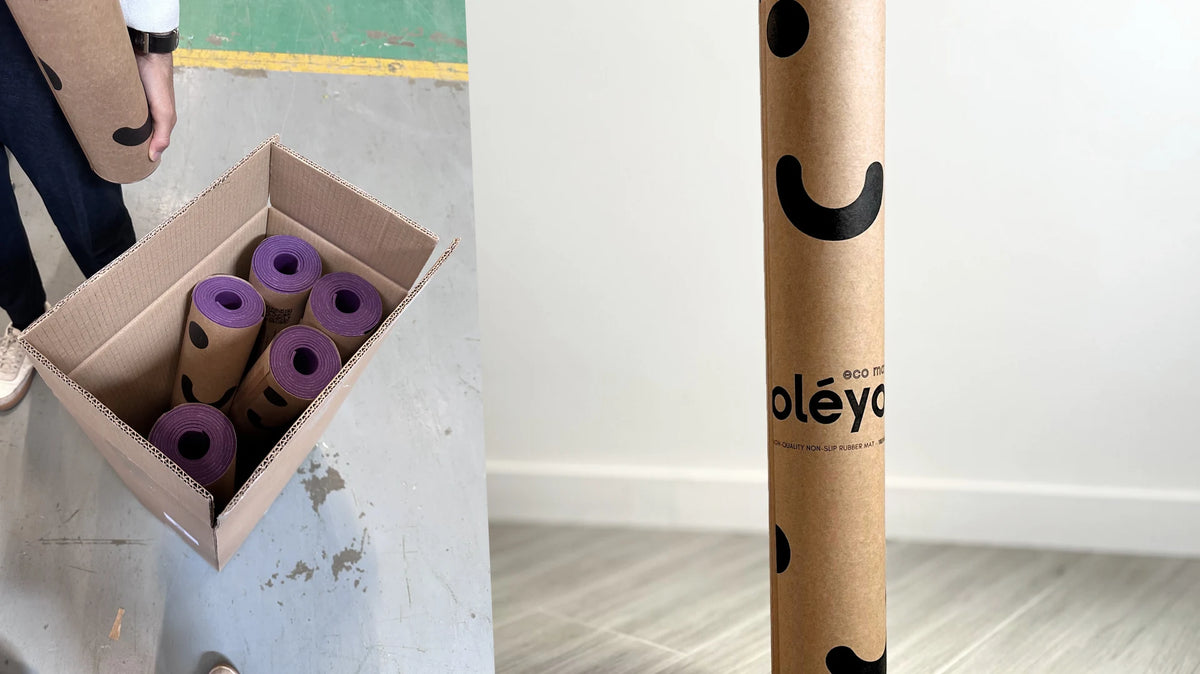

GoalGrip and AirCore: what the mat is made of
Two grip surfaces, a recycled core and organic cotton in between, fused with heat and no glue anywhere. What each layer does, and what the construction costs.
Our mat is built in layers, not moulded from one material. A closed cell grip surface on each face, an open cell core of recycled natural rubber between them, and a thin interlayer of organic cotton holding the structure together. We call the surface GoalGrip™ and the core AirCore™, and there is no glue anywhere in it.
Grip and cushioning want opposite things from a material. The only way to have both is to stop asking one layer to do both jobs.
Why one material cannot do both jobs
Grip wants a surface that does not absorb, so sweat stays on top where it can be wiped off, and that does not deform under your palm. Cushioning wants a material full of air, which is soft and open by definition.
Those are contradictory requirements, and a mat made from one uniform material has to compromise on one of them. Most do. The alternative is to build the mat in layers and give each one a single job.
No adhesives, which is the part nobody asks about
The layers are fused with heat rather than bonded with glue, and a thin interlayer of organic cotton holds the structure together.
This is where the chemistry usually hides in a mat that otherwise describes itself as natural. The surfaces can be rubber and the thing holding them together can be a synthetic binder, and nobody lists the adhesive on a product page. It is the least visible component and one of the least pleasant.
No glue means there is nothing between the layers to break down, off-gas or delaminate as the mat flexes over years of practice. It is also what makes the mat genuinely reversible: both faces are finished practice surfaces rather than one face and a backing.
GoalGrip™: the surface
A closed cell rubber surface, on both faces. Closed cell means the cells are sealed: nothing soaks into the material, sweat stays on the surface where you can wipe it off, and the mat cleans in seconds rather than absorbing what you leave on it.
Sealed cells also mean the surface does not soften as it takes on moisture, so the contact patch under your palm stays the same through a session. That consistency is most of what people mean when they say a mat feels reliable, and it is a different property from raw grip.
We are not going to turn that into a grip number, because nobody in this category publishes one, ourselves included. Treat this page as a description of how the mat is built rather than a measurement of how well it works.
AirCore™: the core
An open cell core, the opposite structure doing the opposite job. Open cells mean air passes through the material, so it absorbs shock in the smallest possible space and weighs a fraction of what solid rubber would.
This is the whole reason a 4 mm natural rubber mat can weigh 1.8 kg. A solid rubber mat of the same thickness lands closer to 2.5 kg, which is the difference between a mat you carry and a mat you leave at home.
It is also where the recycled material is. The core is made with up to 85 % recycled natural rubber, the one point in this product's life where the loop genuinely closes. Recycled rubber is still rubber, so both things are true at once: the mat is 100 % natural rubber, and much of that rubber has already lived one life. Nothing is diluted with plastic to get there.
How the layers stack up
| Layer | Structure | What it is for |
|---|---|---|
| GoalGrip™ surface | Closed cell rubber | Grip, and keeping sweat on top so it wipes off |
| Organic cotton interlayer | Woven | Holds the structure without glue |
| AirCore™ core | Open cell rubber, up to 85 % recycled | Cushioning and shock absorption, at a fraction of the weight |
| GoalGrip™ surface | Closed cell rubber | The same again, because the mat is reversible |
The second grip surface is not symmetry for its own sake. Wear concentrates in the two patches where your hands land, so a mat with two finished faces has roughly twice the useful surface, which extends how long a natural rubber yoga mat lasts.
Other characteristics of the oléyoga mat
- It is not for hot yoga. A closed cell surface keeps sweat on top, which is what makes it hygienic and what makes it lose to an open cell surface once you are sweating continuously. We say buy cork if your practice is consistently hot.
- 1.8 kg is the price of density. It is what makes it grip and stay put. AirCore keeps it well under the 2.5 kg a solid rubber mat of the same thickness would weigh, so it rolls up and goes to class every day.
- It contains latex, because it is natural rubber. If you have a diagnosed latex allergy, that is a question for your allergist.
Common questions
Is the whole mat closed cell?
No, and the distinction matters. The surfaces are closed cell, the core is open cell. Anyone describing a mat as simply “closed cell” is describing one layer.
Does the open cell core absorb sweat?
It cannot reach it. The closed cell surfaces are what stand between your hands and the core, which is exactly why the mat is built this way.
Why does no glue matter?
Adhesive is the component nobody lists and the one most likely to be synthetic in a mat sold as natural. It is also what fails first when layers separate.
Is recycled rubber weaker?
Not in this construction. It sits in the core, where the job is cushioning rather than grip, and the surfaces are what your hands and feet actually meet.
The short version
Closed cell grip on both faces, an open cell core of up to 85 % recycled natural rubber, organic cotton in between, and no adhesive anywhere. The surface is why it holds, the core is why it weighs 1.8 kg and not 2.5, and the absence of glue is why the layers stay together.
More on the material in our guide to natural rubber.
More about the Eco Daily non-slip natural rubber yoga mat.
-
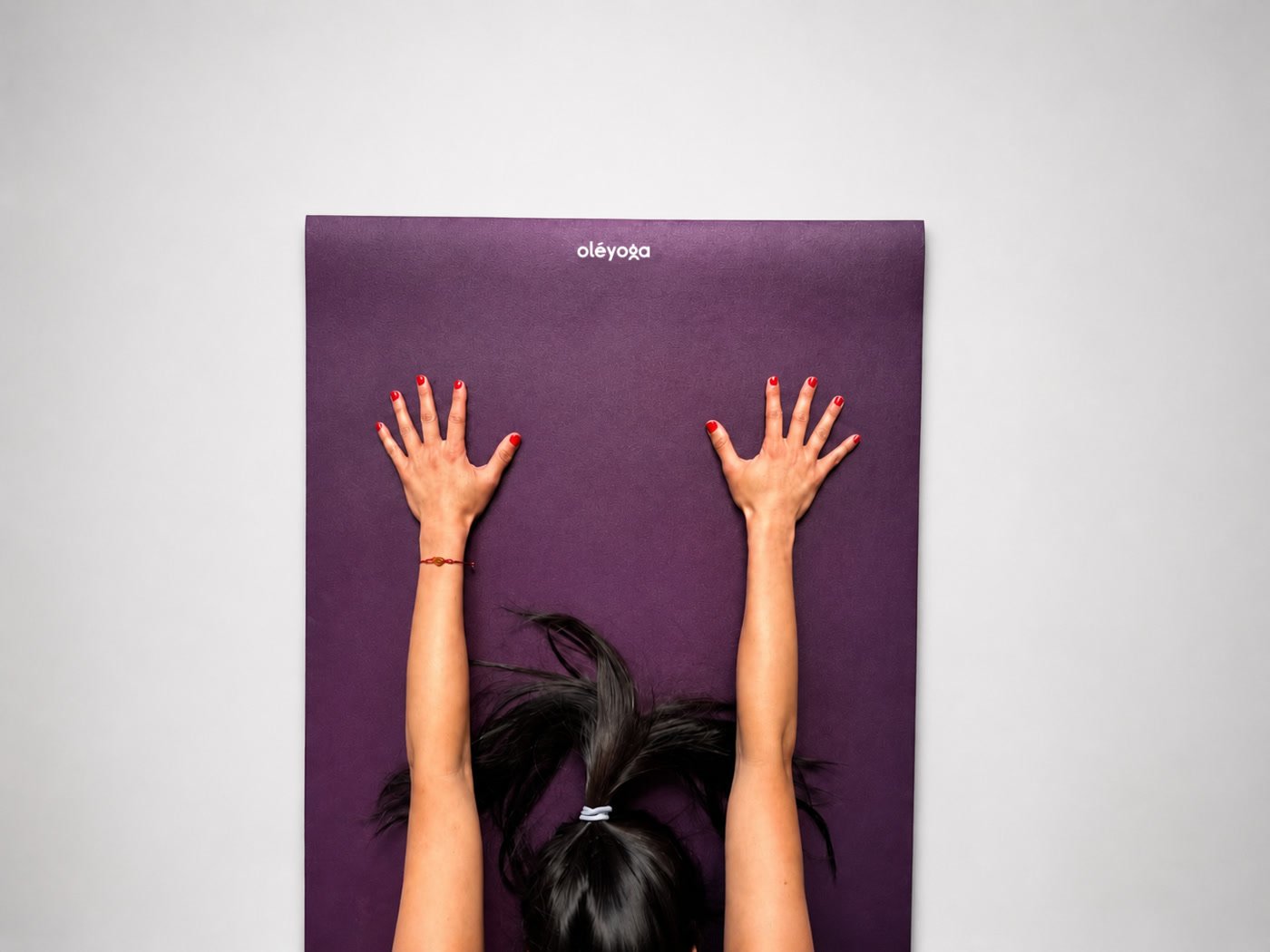
GRIP
Natural rubber surface
Texture and GoalGrip™ for high friction from the first use.
-
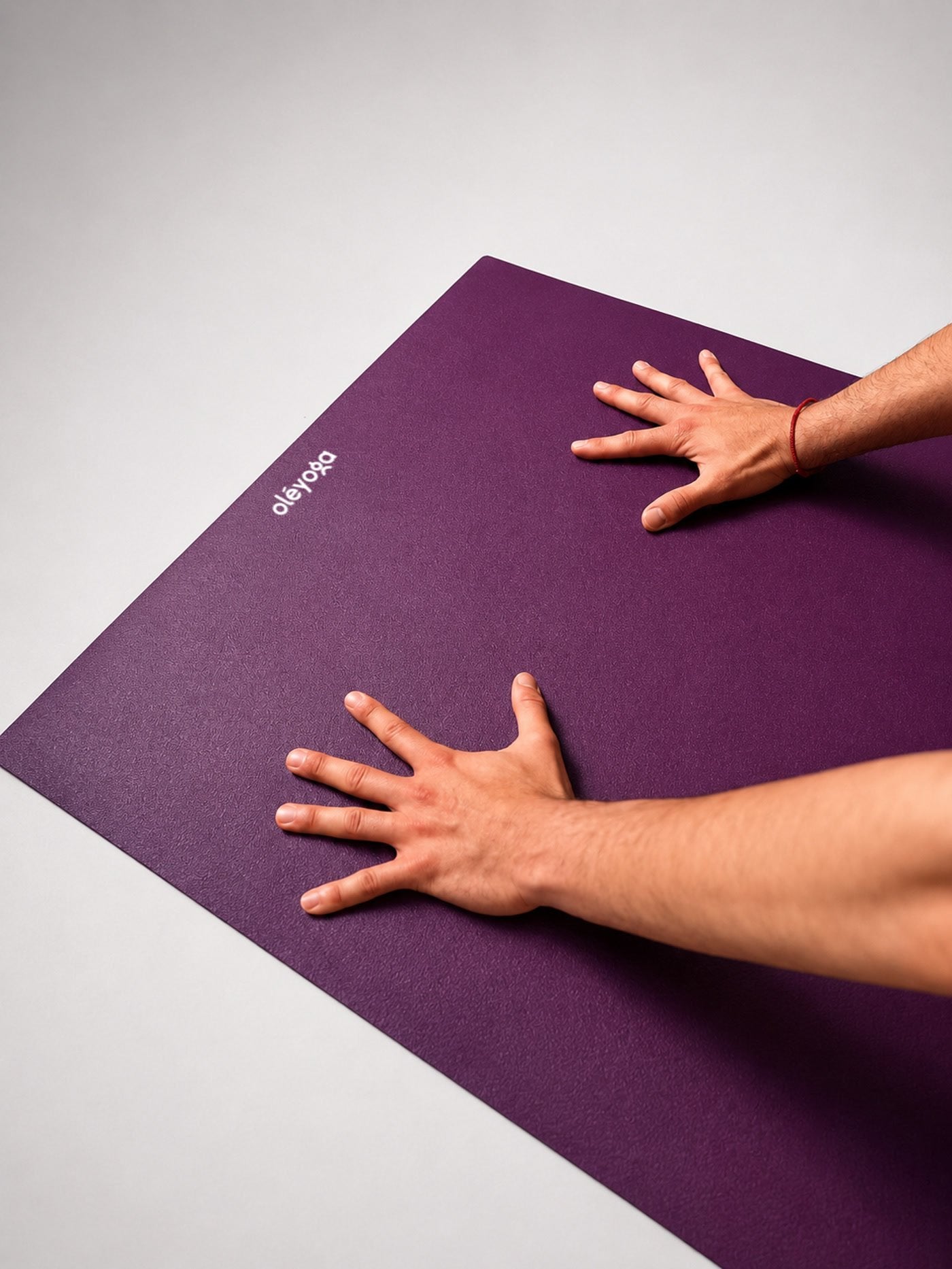
PRACTICE
Grip that improves with use
Strong grip when dry. With practice it adapts to your hands and feet.
-
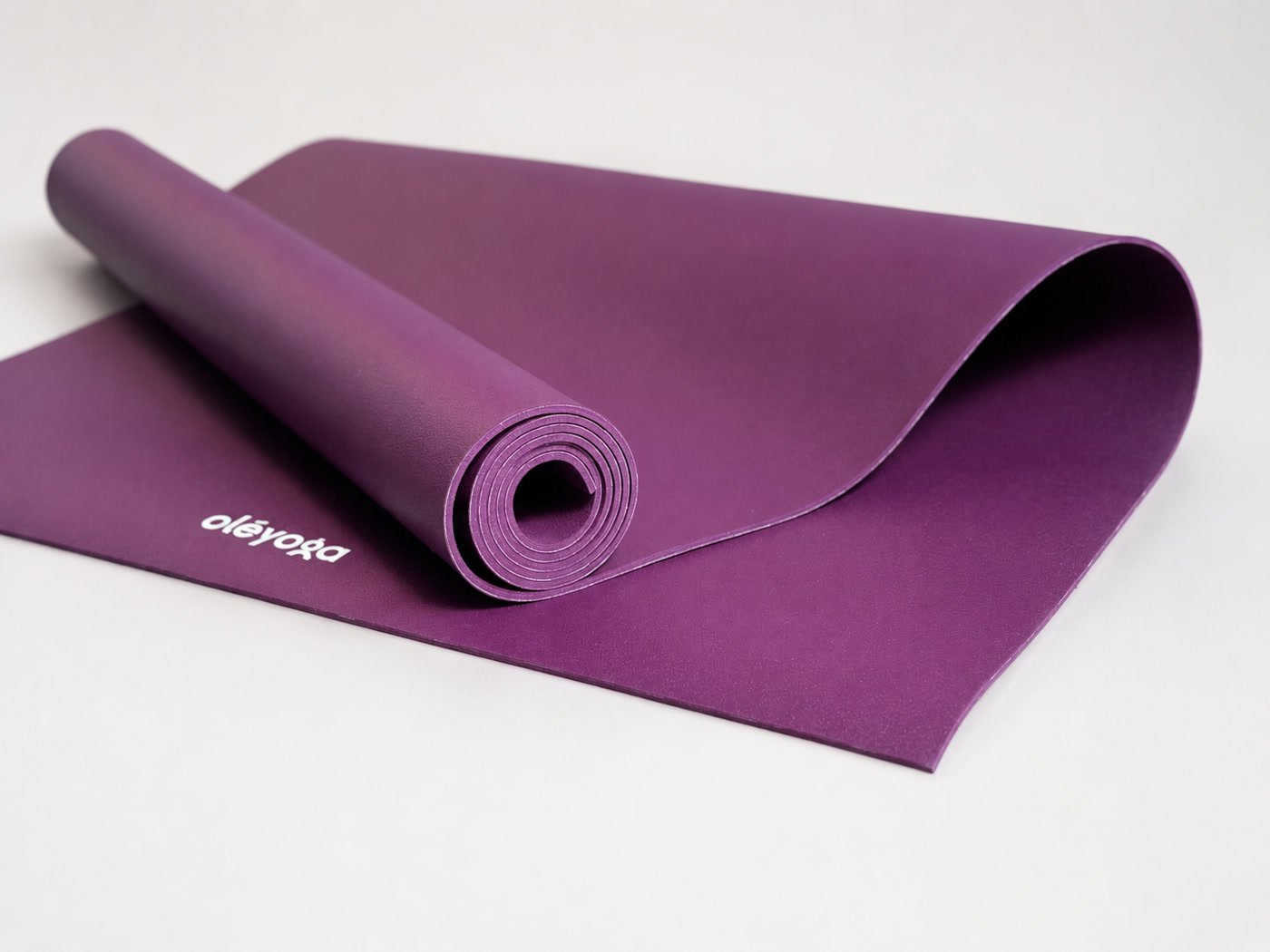
DESIGN
4 mm, reversible
Cushioning and stability. Two sides. 185 × 65 cm · 1.8 kg.
-
ORIGIN
Made in Europe
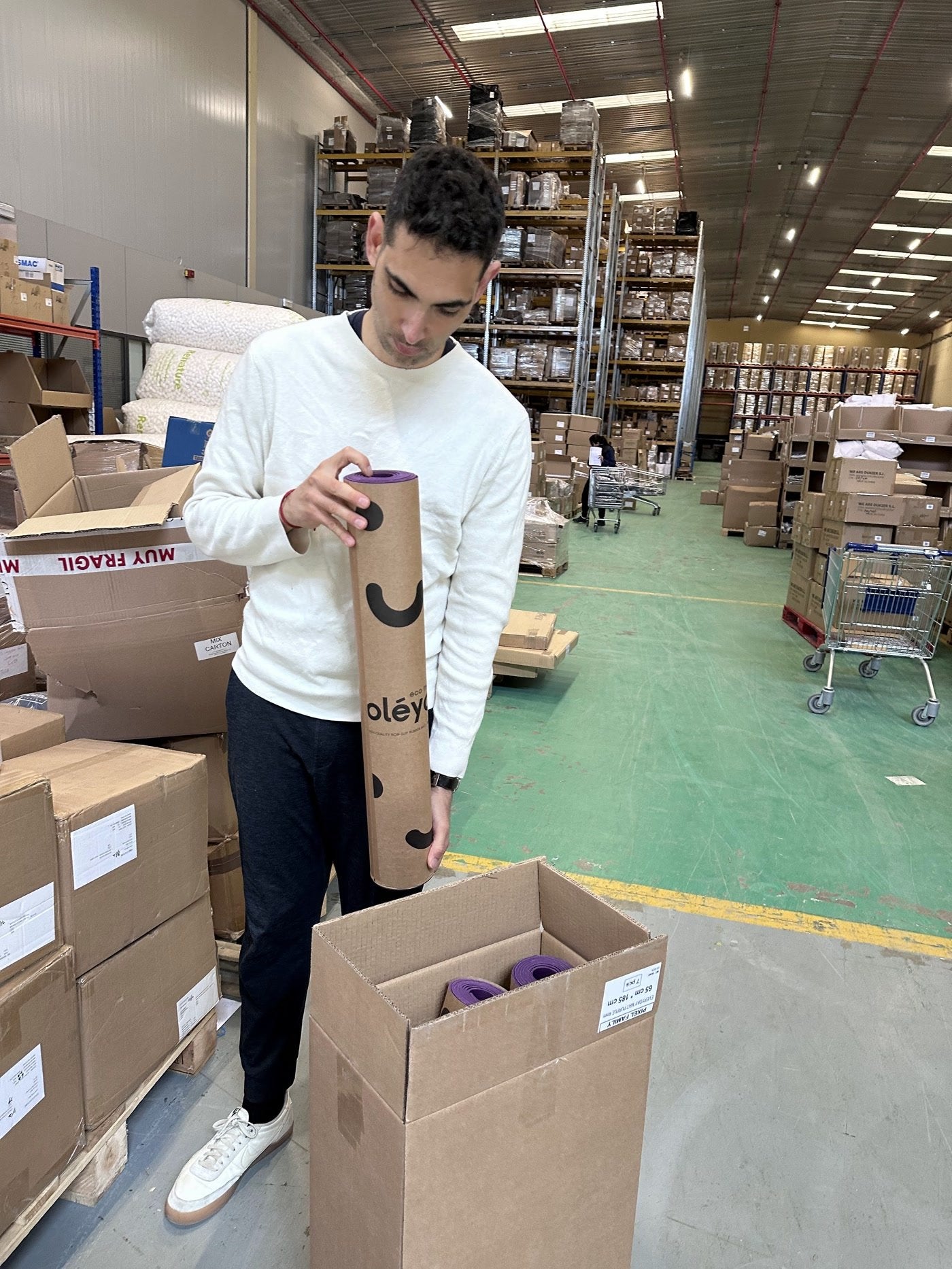
100% natural rubber, 0% plastic, OEKO-TEX® certified.
-
PLANET
One tree per mat
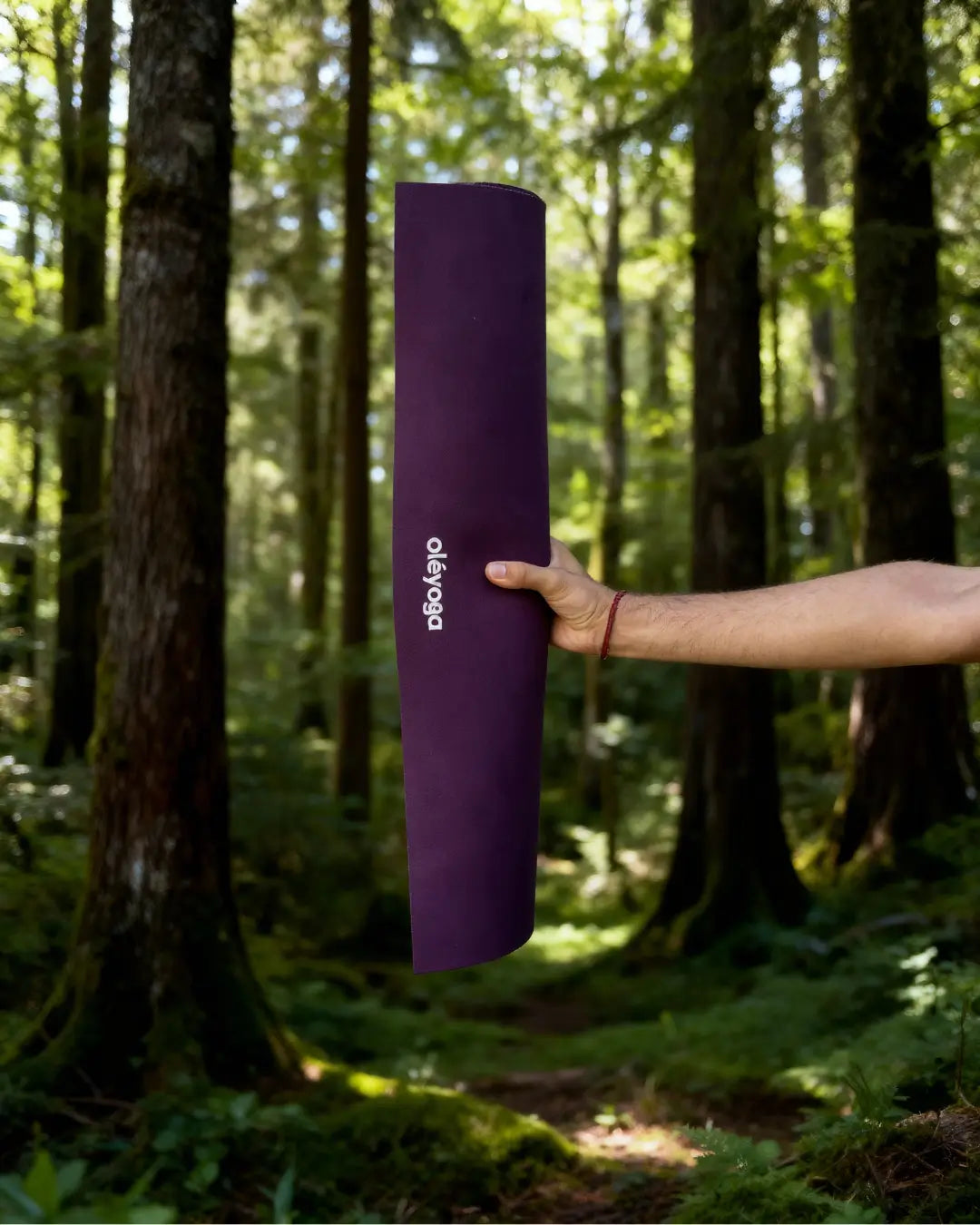
We plant a tree for every yoga mat sold.
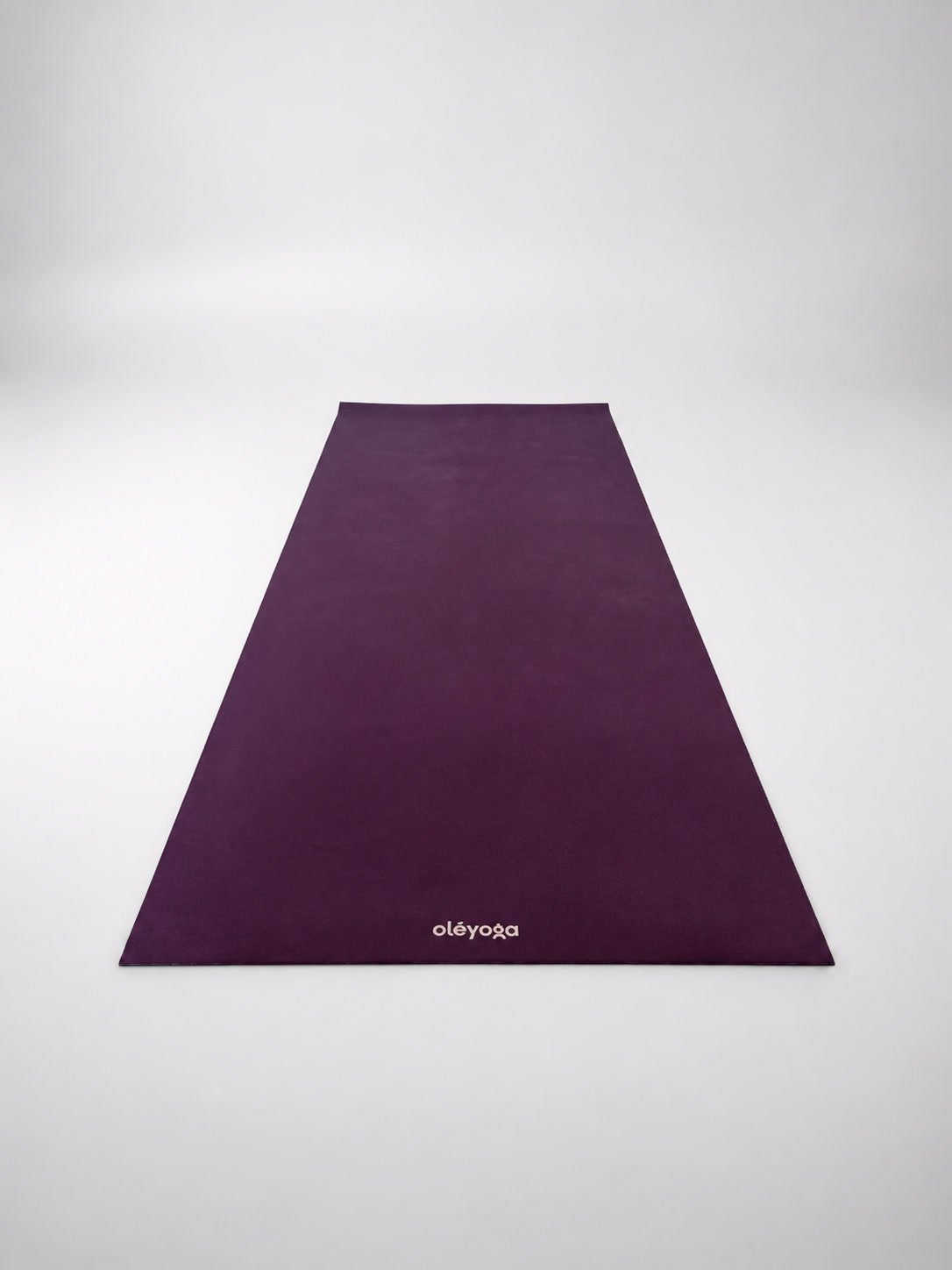
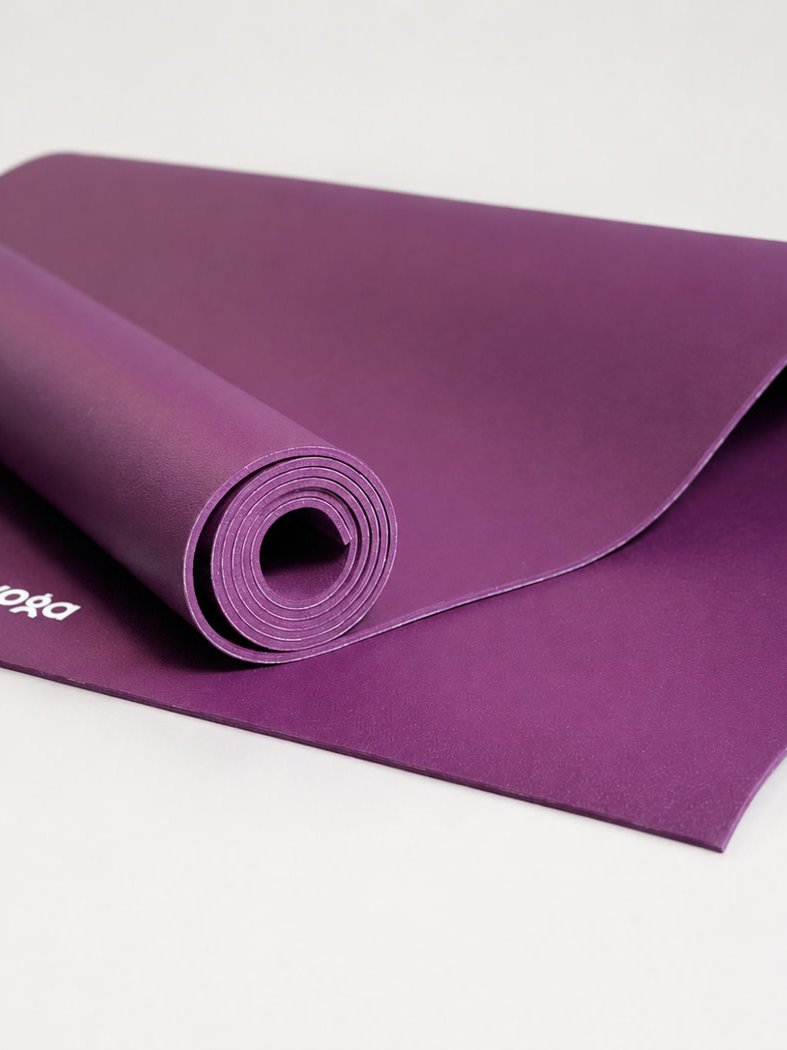
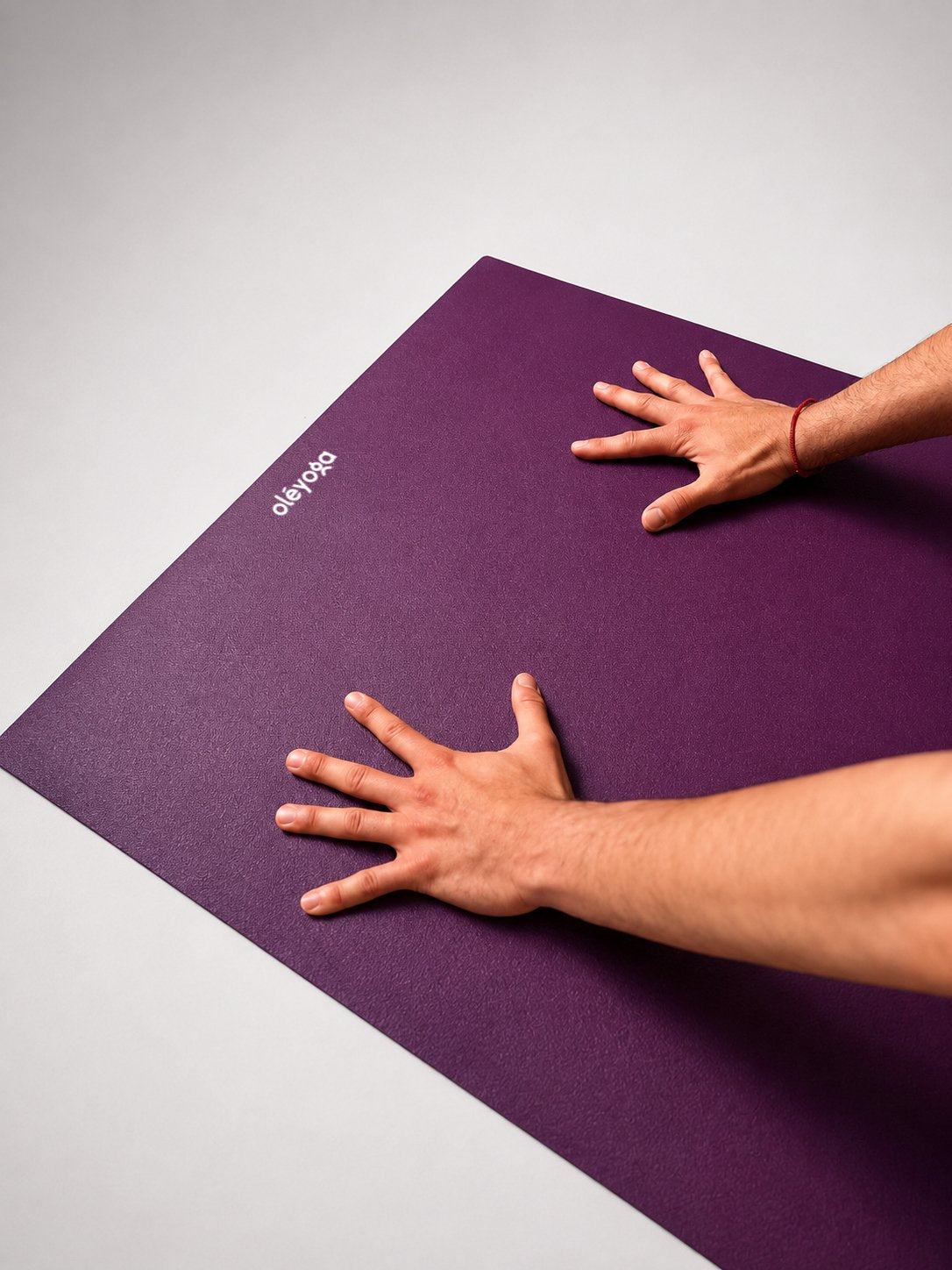
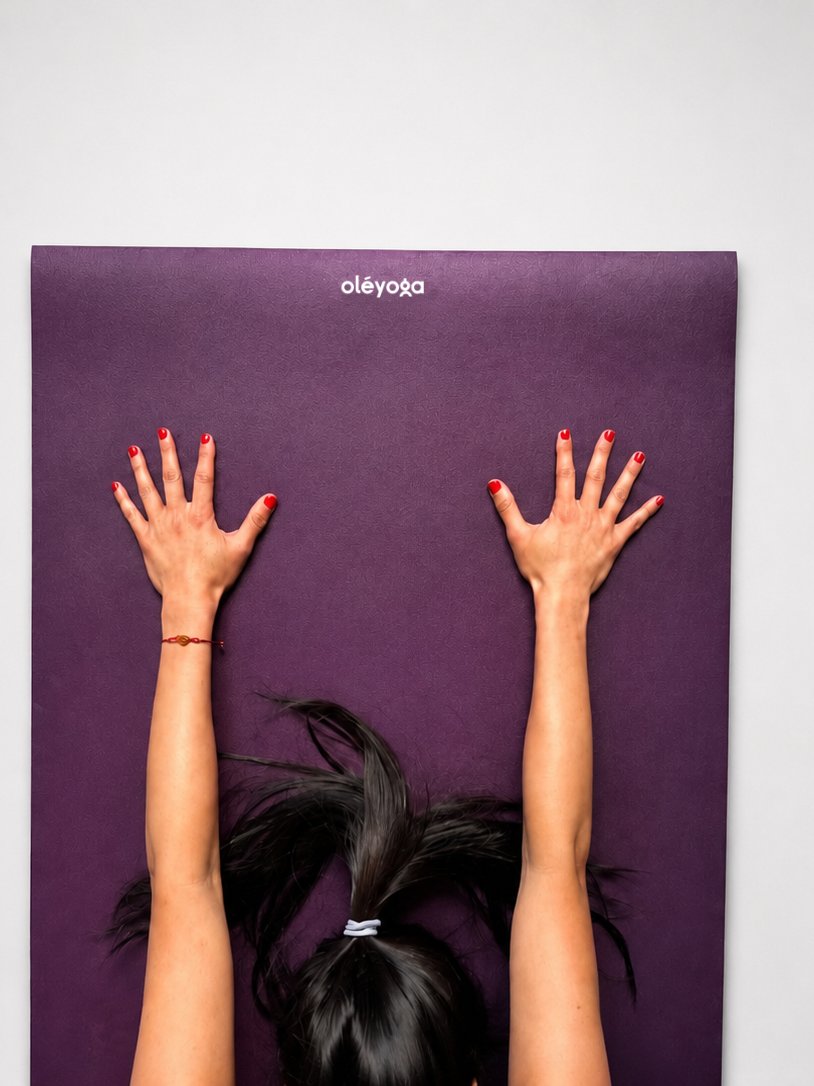
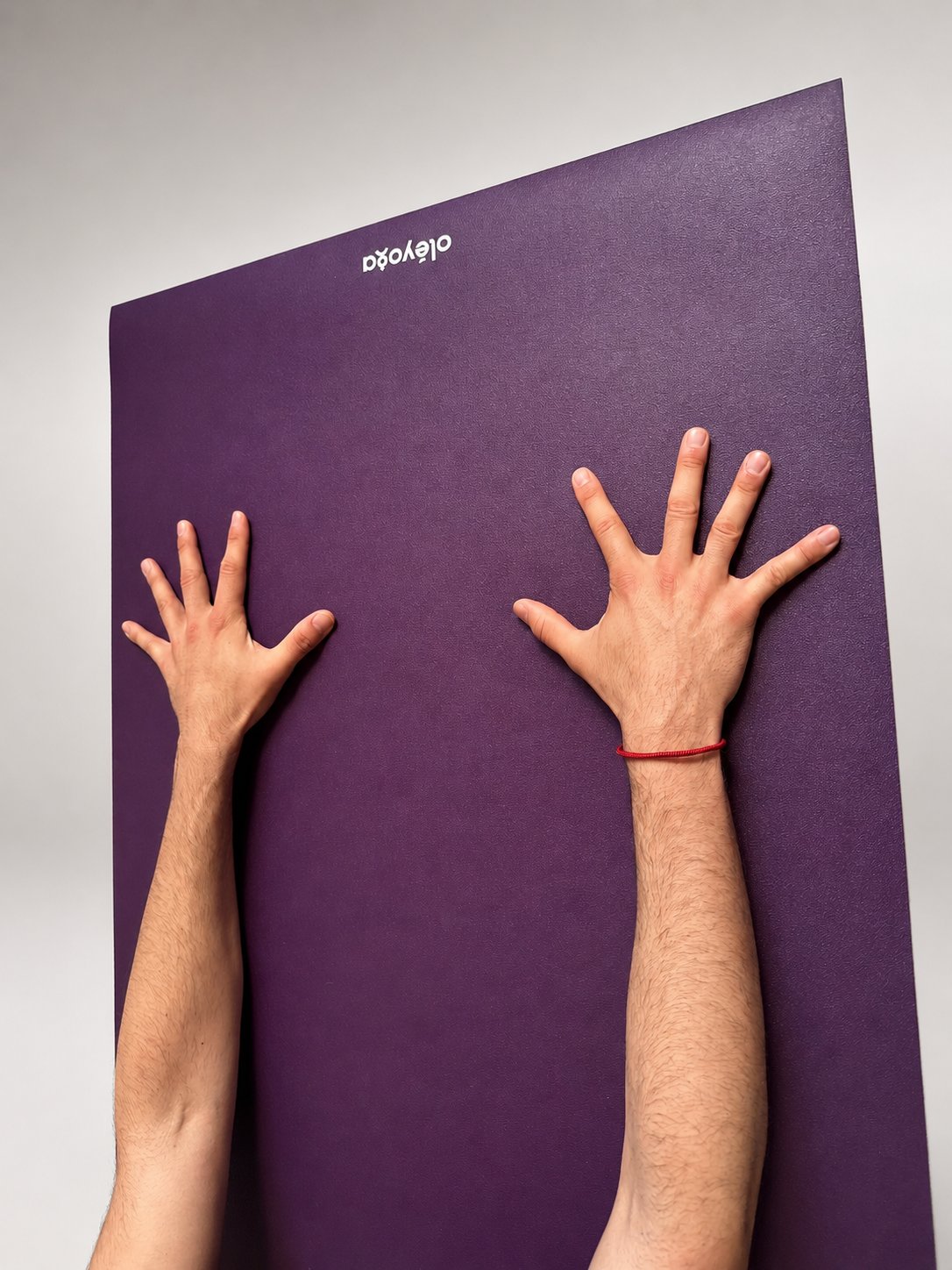
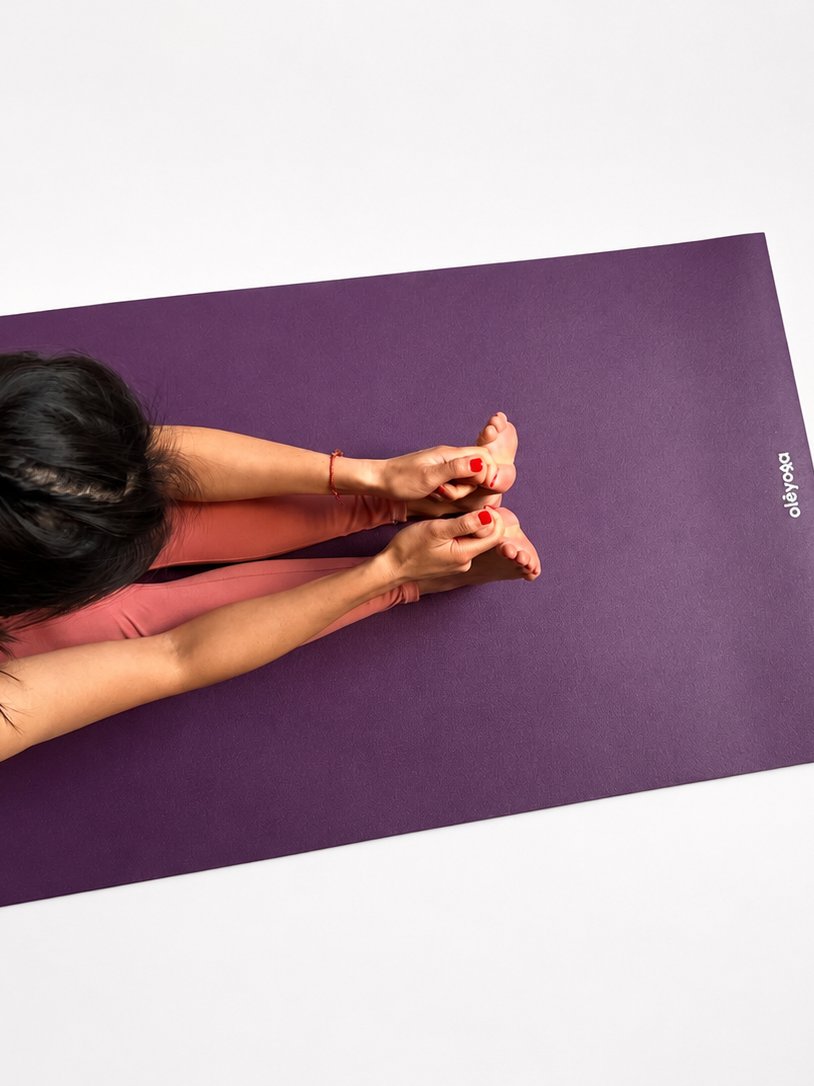
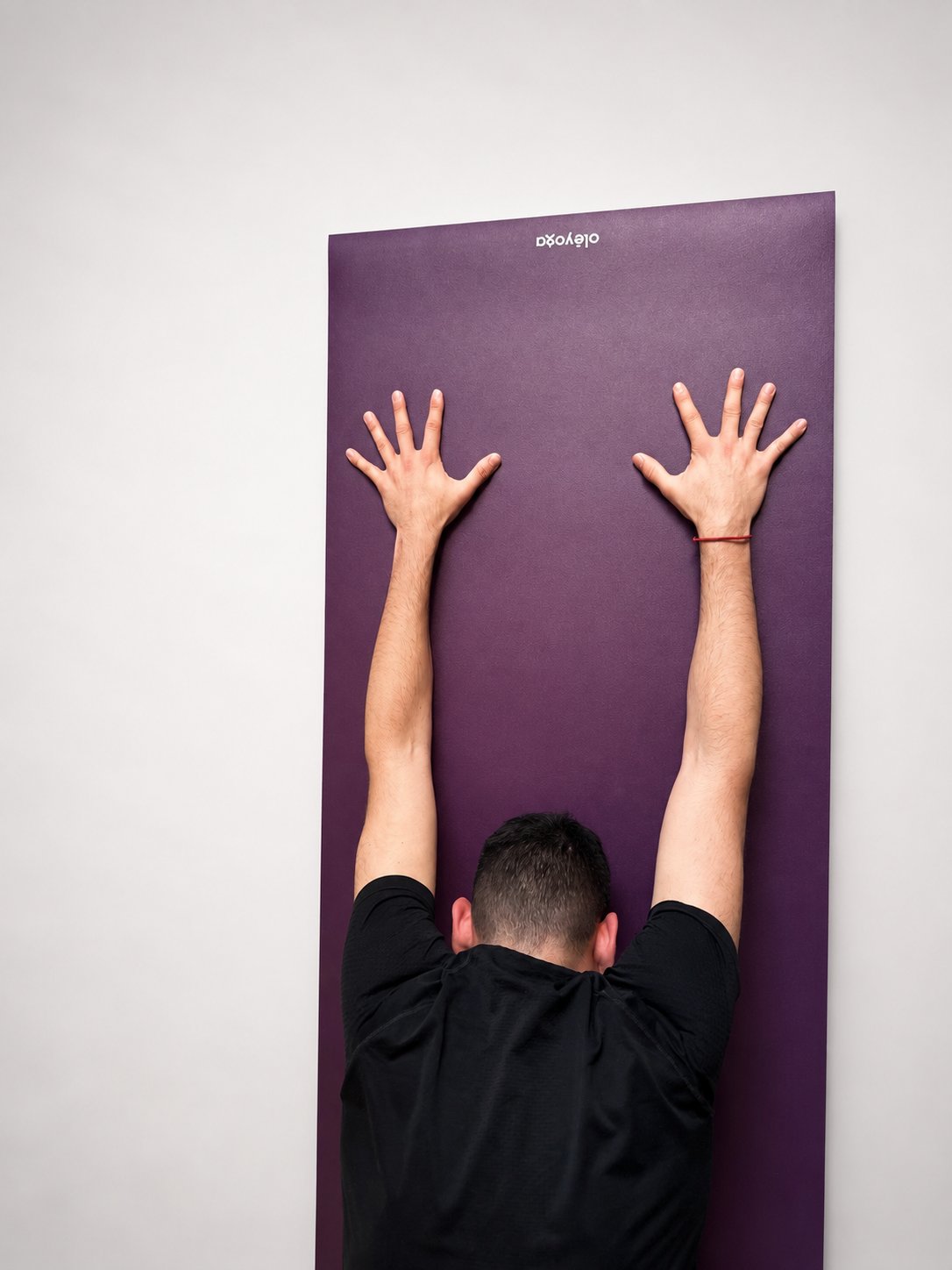
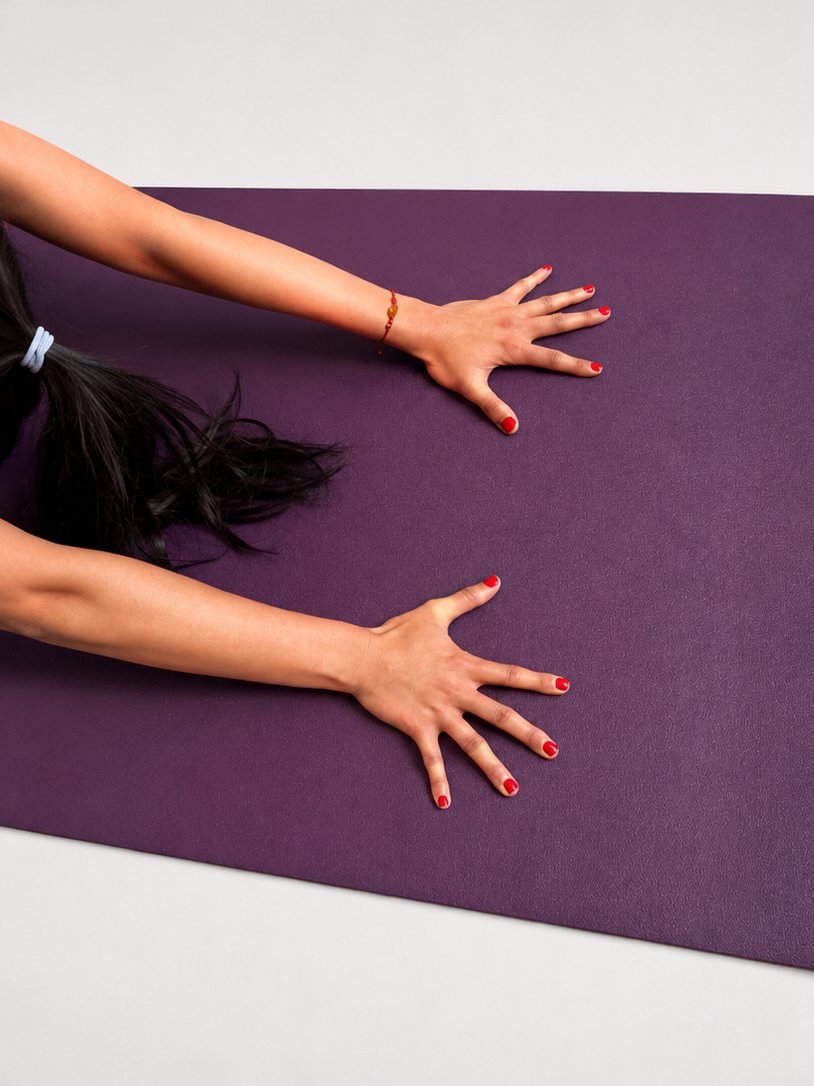
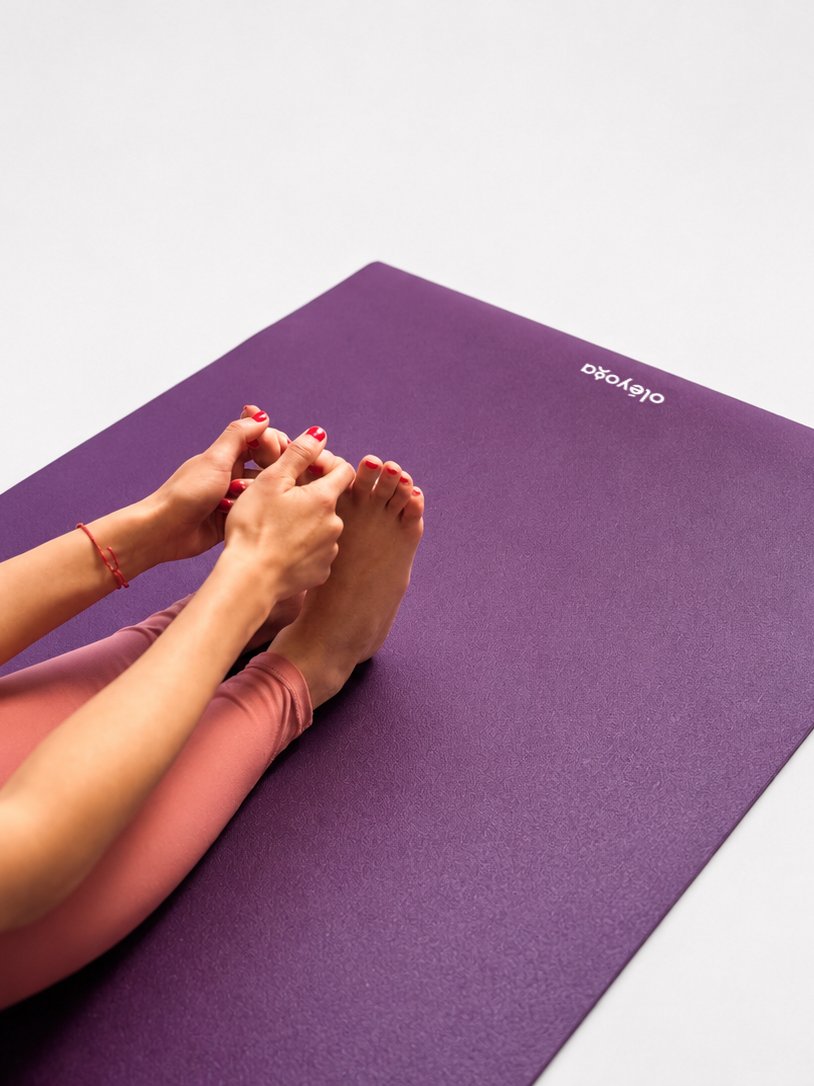
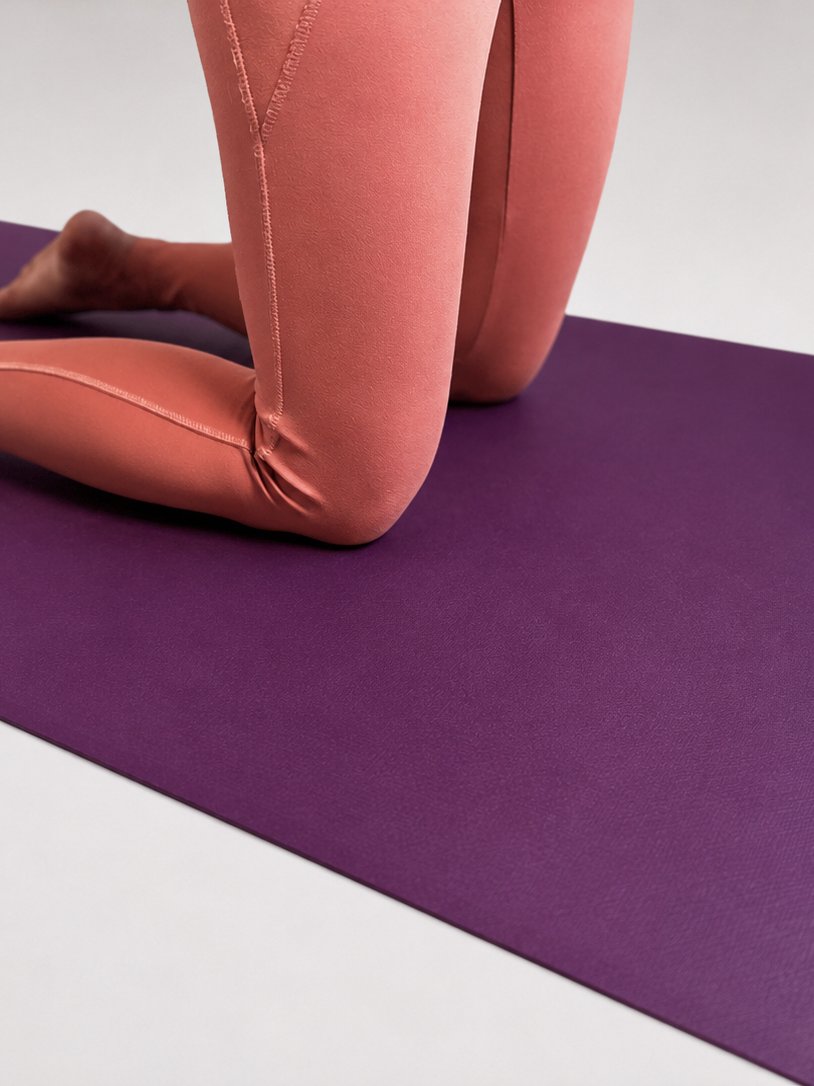
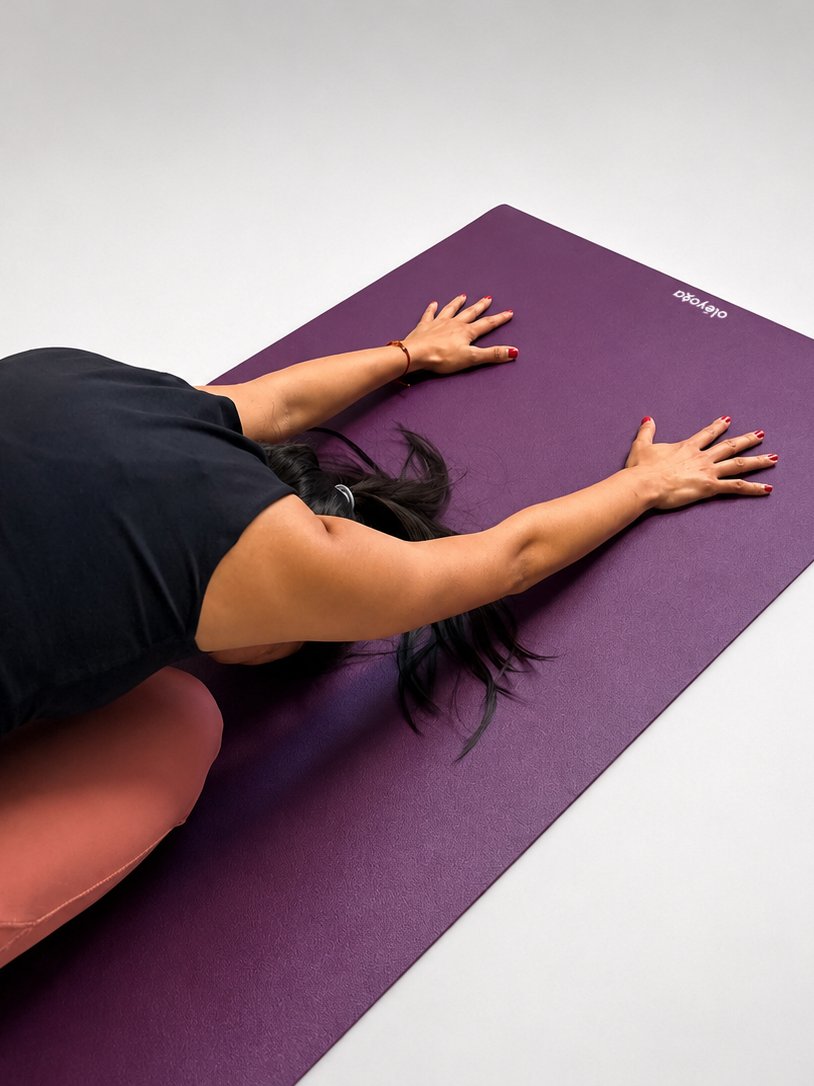
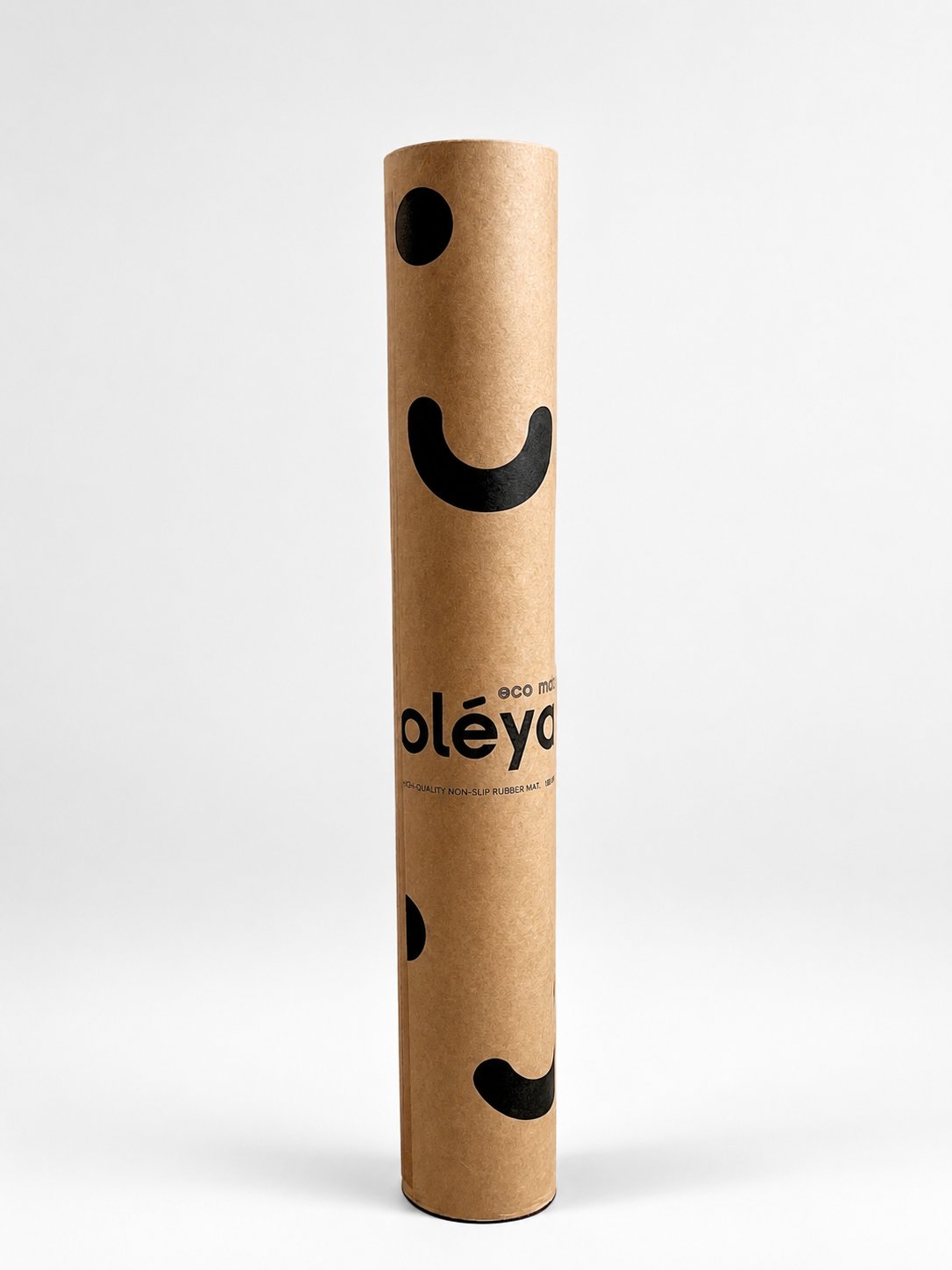
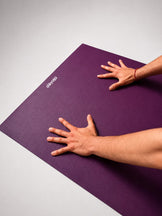
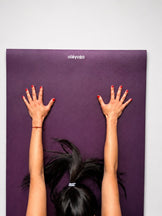
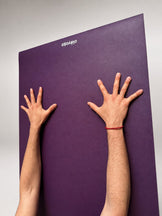
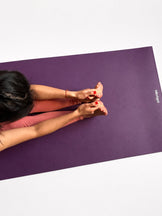
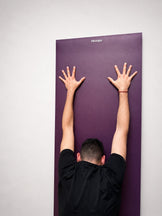
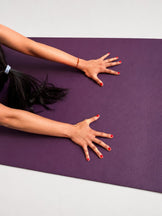
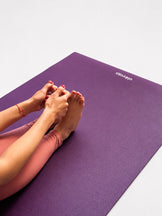
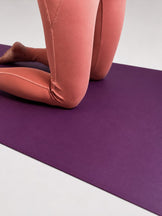
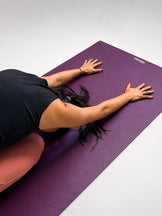
Steady natural-rubber grip from the first practice. Made in Europe · 4 mm · 1.8 kg · reversible · OEKO-TEX®.
One yoga session is all it takes to feel it: no more slipping. Made in Europe from 100% natural rubber with a non-slip technology, for a steady, mindful practice.
Store it. Roll it. Take it to class or home. It is reversible and weighs just 1.8 kg.
Join +1000 yogis already practicing on a more sustainable model of yoga.
More on the same question
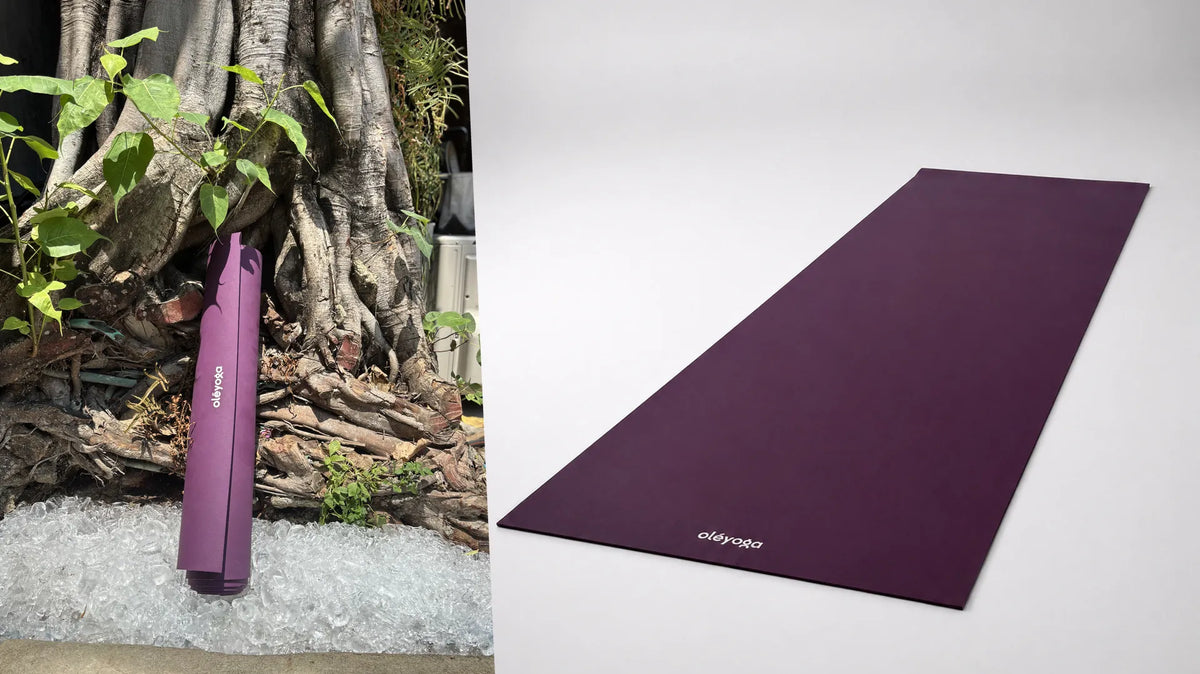
What to do with an old yoga mat
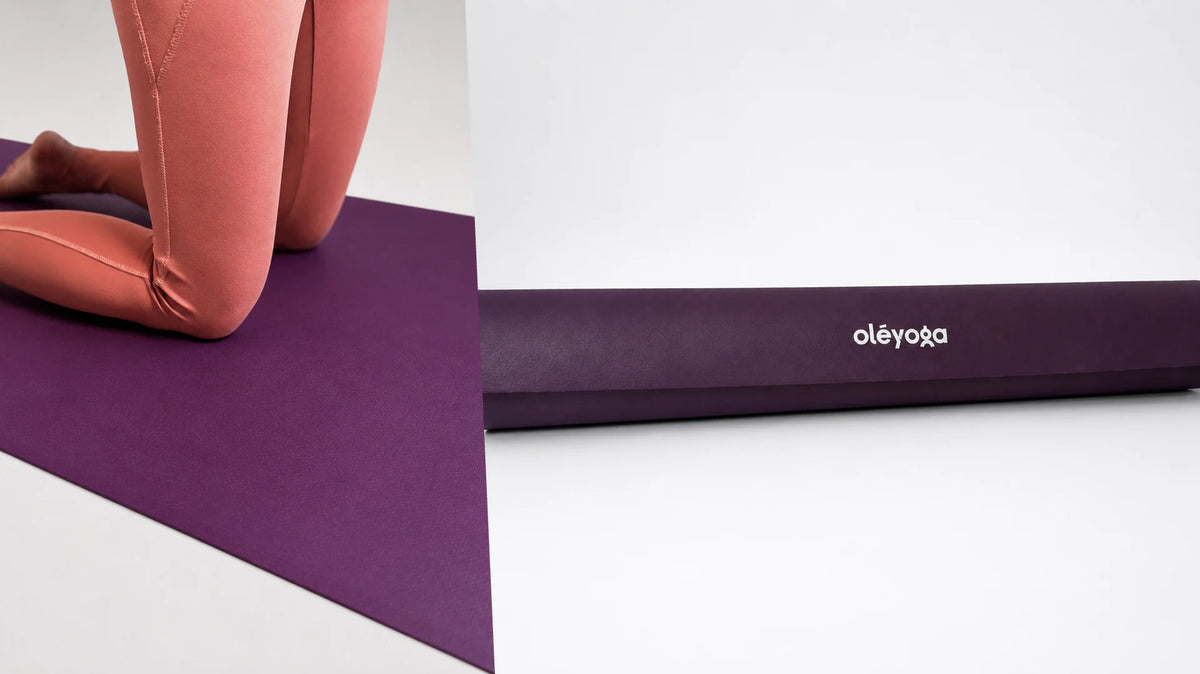
How to clean a natural rubber yoga mat