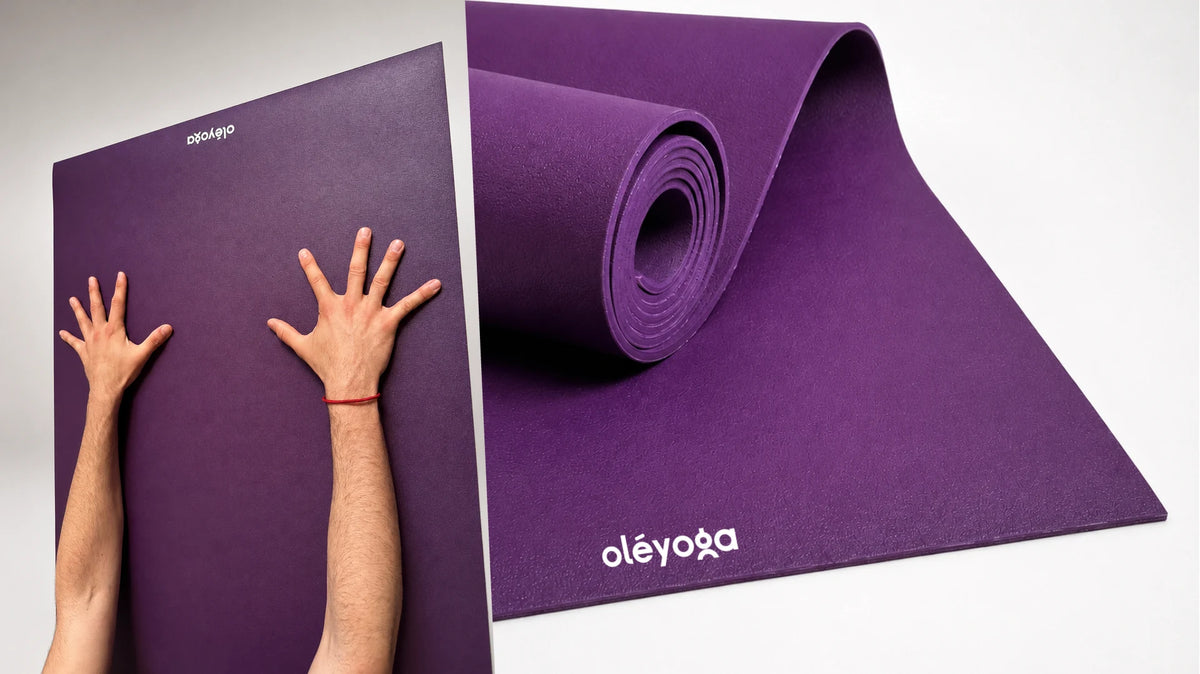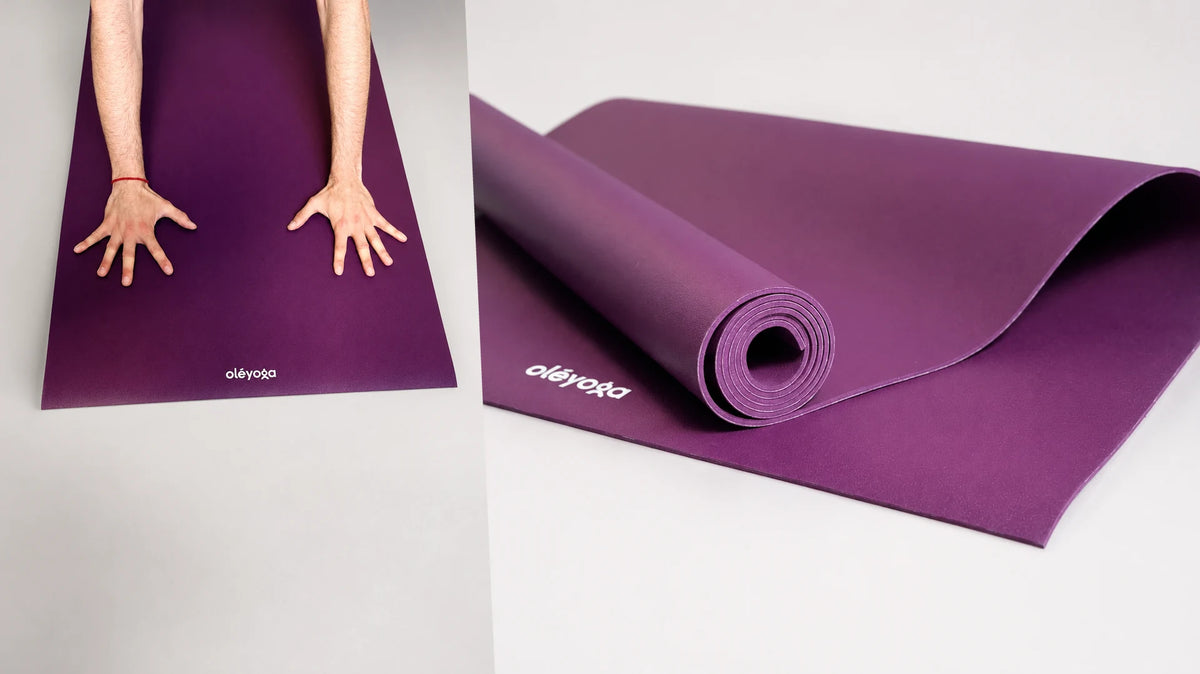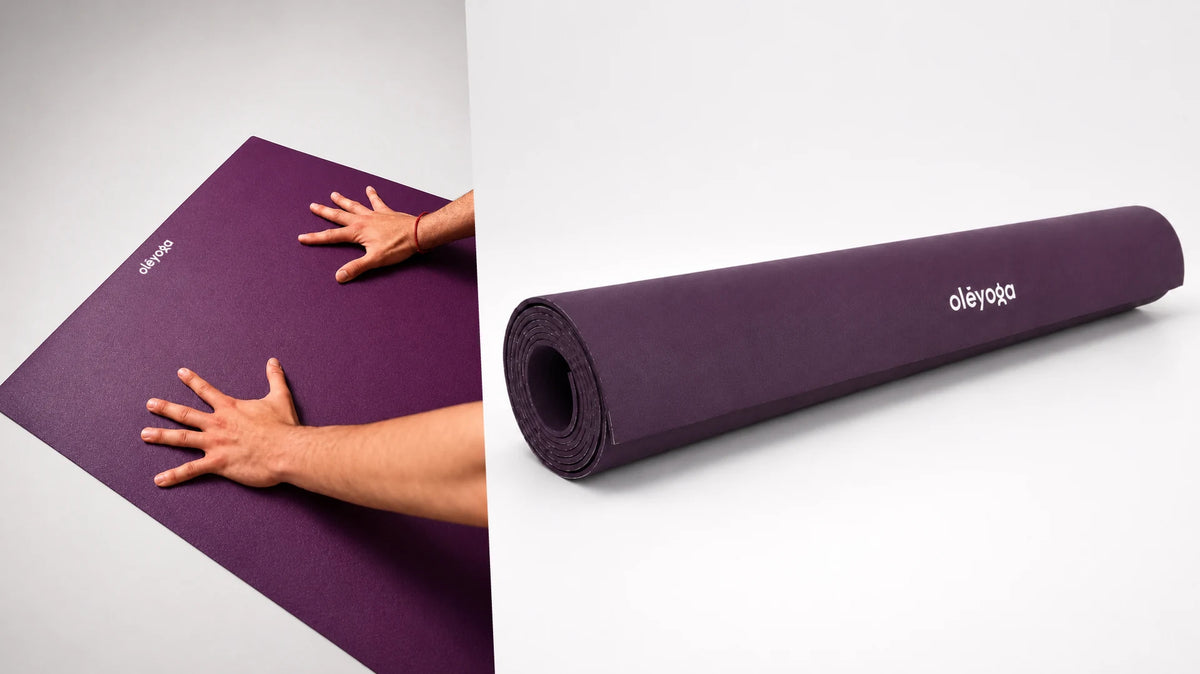

A mat can have a natural rubber base and a polyurethane surface at the same time. That is why “rubber mat” alone does not tell you what your hands will touch. When choosing between PU-coated and rubber-surfaced mats, compare the top layer, the support underneath and the conditions in which you practise.
Separate the surface from the base
PU means polyurethane. In a layered mat it may form the contact surface, while natural rubber provides the base. A mat with a natural rubber practice surface is a different construction. Neither description tells you the complete recipe: ask about coatings, intermediate layers and which face is intended for use. Our materials comparison gives the broader context.
Compare your practice, not a universal grip ranking
The useful question is how a particular model behaves in your normal class. Dry hands, moisture, room temperature and cleaning residues can change the experience. A label such as “PU” or “natural rubber” is not a measurement of grip. Look for the manufacturer's intended use and any tests with stated conditions. Separate hand traction from whether the mat stays in place on the floor; our grip guide explains that distinction.
Check care before committing
Read the instructions for the exact model, including permitted cleaners, drying and storage. Do not transfer a cleaning method from one material to another because both mats have a rubber base. If a layered mat is designed for one-sided use, turning it over does not make the base an equivalent practice surface. Check what the manufacturer says about wear, rather than assuming the coating or the rubber will last a fixed number of years.
Compare complete mats of similar size
Record length, width, thickness and weight beside the surface description. Two mats with the same base material can be quite different to carry and use. Consider the total delivered price and return conditions, especially if you cannot try the mat first. For a comparison of named models and their published specifications, see ALO Yoga and oléyoga.
Where Eco Daily fits
Eco Daily has natural rubber practice surfaces on both sides, a recycled rubber core and a structural cotton layer. Its published dimensions are 185 × 65 cm, 4 mm and 1.8 kg. We recommend it for Hatha, Vinyasa and Ashtanga at normal room temperature, not hot yoga. Those specifications do not establish superiority over a PU mat. Review Eco Daily's current product information and choose the construction that matches your practice and care routine.