
Hiring yoga mats can suit a one-off event or a retreat without space to store equipment. Buying may make more sense if you run regular classes and can manage storage and care. The decision depends on actual use, the complete budget and who will look after the mats before and after each gathering.
When does hiring yoga mats make sense?
Hiring equips a group for specific dates without leaving you with all the equipment afterwards. It can be practical for a workplace session, occasional workshop, festival or retreat that moves between venues.
That flexibility has a trade-off: you need to confirm availability and transport for each activity. If you organise frequent events, do not assume hiring will always be cheaper. Compare your planned calendar and complete quotes for the same period.
When might buying be the better fit?
Buying can suit a group that will use the same mats regularly and has appropriate storage. A studio with weekly classes has different needs from an organiser using equipment once a year.
Ownership comes with responsibilities that continue between classes. Someone needs to inspect the surfaces, organise cleaning, let mats dry and arrange replacements when needed. Decide who will do that work and where the equipment will be kept before making the purchase.
| Consideration | Hiring | Buying |
|---|---|---|
| Use | Agreed for specific dates. | The equipment remains available for future activities. |
| Spending | Depends on quantity, days and transport. | Includes the purchase and subsequent costs of use. |
| Storage | Ends when you return the equipment. | You need space between sessions. |
| Planning | Confirm quantities and logistics for each booking. | Monitor the condition and number of your own mats. |
How can you compare the costs fairly?
Choose the same period and number of participants for both options. For hiring, add the full quotes for all planned events. For buying, add the equipment price, transport, storage and maintenance costs over that period.
oléyoga's rental rate is €15 per mat per day, with transport agreed according to location. If you do not know how many events you will repeat, calculate one scenario using confirmed dates and another using possible dates, without treating those possibilities as certain.
There is no universal number of events after which buying becomes better. It changes with the purchase price, rental days, journeys and subsequent use. Start with our yoga mat rental budget examples and request a separate purchase quote.
Is hiring always more sustainable?
Reusing available equipment can avoid buying a set of mats for a single gathering. That alone does not prove every rental has a lower environmental impact: transport, care and how often the equipment is used also matter.
The European Commission's waste hierarchy places prevention ahead of disposal. For an organiser, a practical starting point is to check which usable equipment the venue already has and what is actually missing. Mats in good condition do not need replacing simply so that every item is new.
Start with how the equipment will be used. Choose between hiring and buying after doing the sums.
What changes when you choose oléyoga mats?
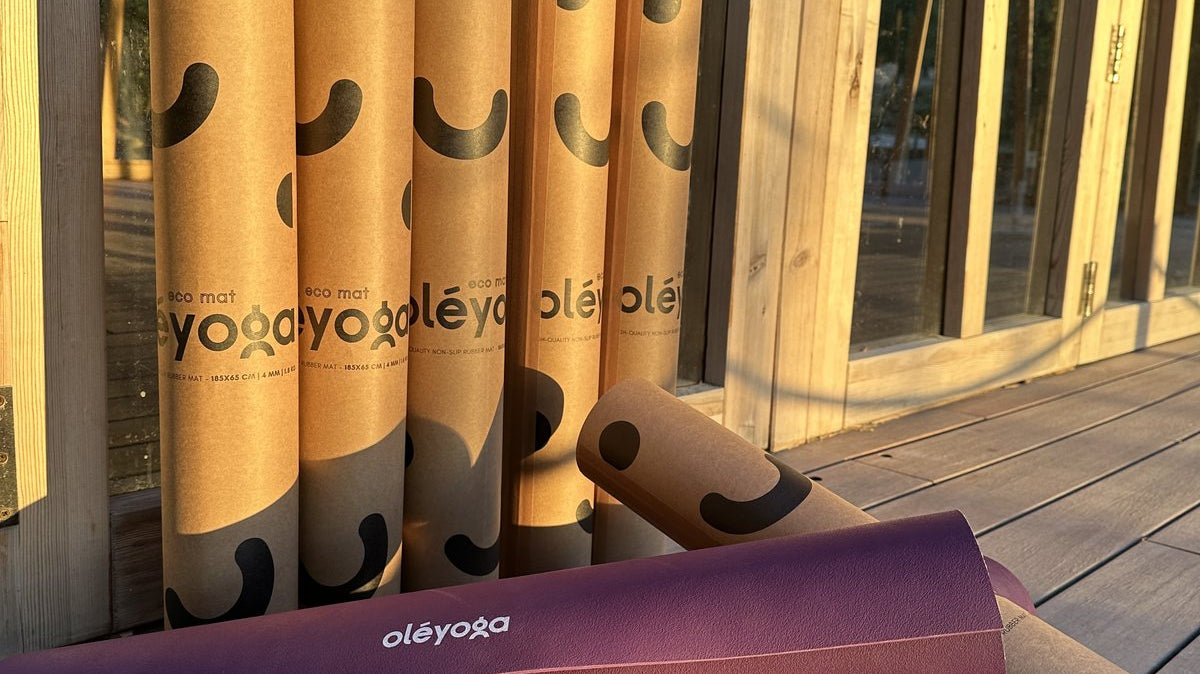
The Eco Daily is a reversible 4 mm mat with natural rubber surfaces, a recycled rubber core and a thin structural cotton layer. It measures 185 × 65 cm and weighs 1.8 kg. For a whole group, those dimensions and that weight matter both during practice and when moving the equipment.
We do not recommend the Eco Daily for hot yoga. If that is your planned activity, review the practice requirements before choosing equipment. For more about the surfaces available, read our comparison of yoga mat materials.
Which option suits your next event?
If you need equipment for specific dates, prepare the details in our yoga mat rental booking checklist and request a rental quote from oléyoga. If you are equipping a permanent space, tell us the quantity you want to buy so that you can compare both options using actual quotes.