
A natural rubber mat starts as sap tapped from a living tree, is mixed with sulphur and heated until it turns elastic, then pressed into a sheet and cured. Four steps, and the differences between one mat and another are almost entirely decided in two of them: what gets blended into the rubber, and what is bonded underneath.
The interesting question is not how it is made. It is what got added along the way.
Step one: tapping
A shallow diagonal cut is made in the bark of a Hevea brasiliensis tree and the latex runs into a cup. The cut does not reach the wood, the tree keeps growing, and the same tree is tapped for decades.
This is the step that makes the material renewable, and it is the one nobody can fake: either the rubber came from a tapped tree or it came from a refinery. Everything after this is processing.
Step two: compounding, where mats stop being equal
Raw latex on its own is sticky and useless as a mat. Before it can be cured it is compounded: mixed with sulphur, accelerators that speed up the reaction, fillers, and pigments.
This is where two mats sold as "rubber" diverge completely:
- Synthetic rubber can be blended in to lower cost. It is cheaper, lighter and less tacky, and the label rarely says how much.
- Fillers such as clay or calcium carbonate bulk out the compound. Cheap in the mix, worse in the grip.
- Pigments decide the colour range. The more colours a range has, the more pigment load it carries.
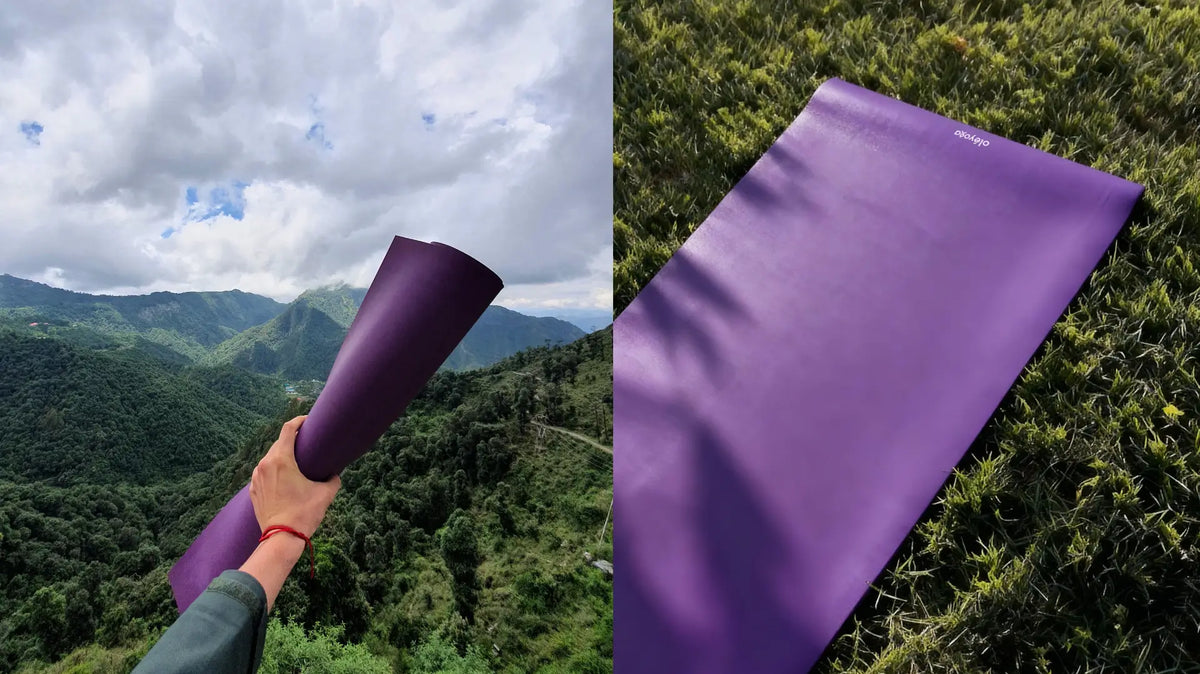
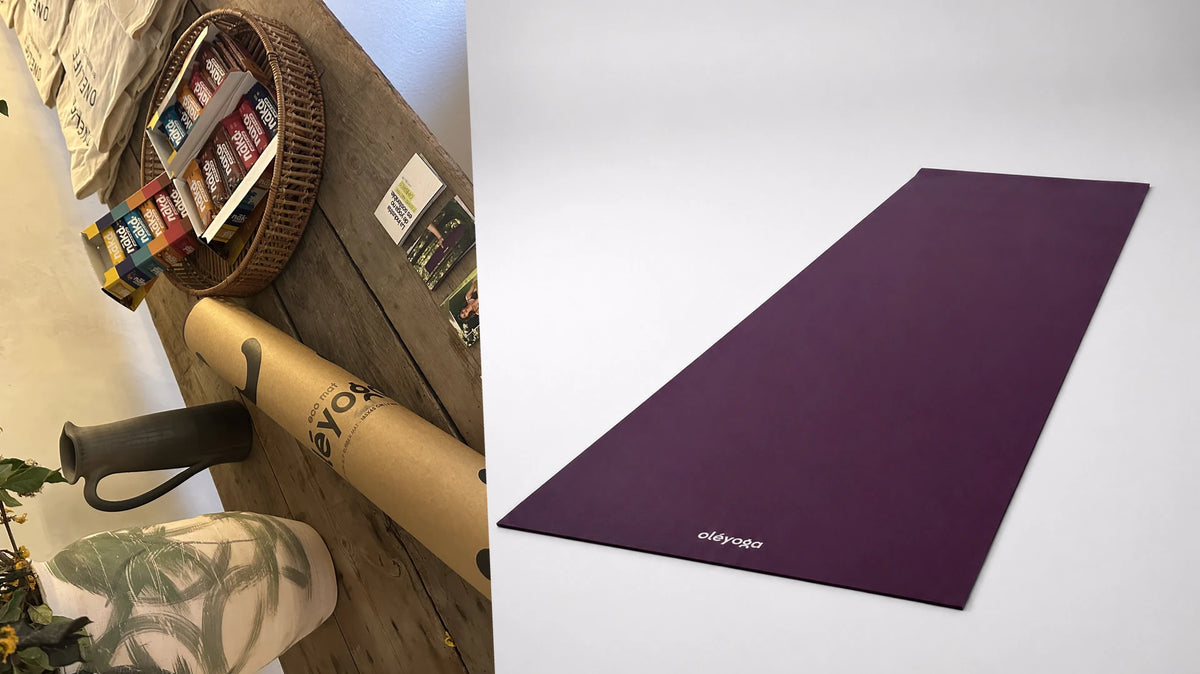
We use one colour, and that is a manufacturing decision before it is an aesthetic one. Fewer pigments in the compound, one recipe to keep consistent.
Step three: vulcanising
The compound is heated with sulphur so the polymer chains cross-link. The material stops being sticky and starts being elastic, resilient and durable. It is the process Goodyear stumbled into in the 1840s and it has a very well developed literature behind it.
Two consequences you feel as a user:
- The smell. Vulcanising leaves volatile compounds behind, and they evaporate over the first weeks. We go into it in does a natural rubber mat smell.
- It is no longer compostable. Cross-linking is what makes the mat last, and it is also why it breaks down over years rather than in a garden heap.
The accelerators used at this stage are also what trigger Type IV contact allergies, which is a different thing from the latex protein allergy and matters if you have one. That distinction is in our guide to yoga mats and latex allergy.
Step four: the sheet, and what is under it
The compound is calendered or pressed into a sheet of the target thickness, cured, cut to size and finished. A 4 mm mat is 4 mm of material, which sounds obvious until you look at how many mats are not.
Many are two materials bonded together: a surface layer for grip or looks over a base that does the structural work. PU, suede, microfibre and cork all sit on top of something, usually rubber. Most cork mats are rubber mats with a cork skin, which is the sort of thing worth knowing before you assume you have avoided rubber.
A single material mat is simpler to make well and simpler to dispose of, because there is no bond to separate. Ours is reversible for the same reason: there is no top and bottom to get wrong.
Where it is made, and why we say so
Almost every mat sold in Europe is manufactured in Asia. Ours is made in Europe, and the reason is not sentimental. A mat made on the other side of the world travels most of the way around it before it reaches a European mat bag, and no amount of renewable raw material offsets that leg.
It also changes what we can tell you. The rubber content, the compound, the pigments and the curing are things we can ask about and get an answer to. At four subcontractors' distance, "100% natural rubber" is something a brand repeats rather than something it knows.
Common questions
Is the tree harmed by tapping?
No. The cut is shallow and the tree regenerates. A tapped tree is worth more standing than felled, which is the structural argument for the material.
Why is a 4 mm rubber mat heavier than a 4 mm TPE one?
Density. Rubber is simply a denser material, and that density is what holds the mat down and gives it grip. It is a trade, not a defect.
Can rubber mats be made without sulphur?
There are alternative curing systems, but sulphur vulcanising is the standard and the best understood. Uncured natural rubber would not survive as a mat.
Does "100% natural rubber" mean no additives at all?
No, and no honest brand can claim that. It means the elastomer is natural rubber rather than synthetic. Curing agents are needed for the material to exist as a mat.
The short version
Tapping, compounding, vulcanising, pressing. The steps are standard across the industry; what separates one mat from another is what was blended in and what was bonded underneath, and almost nobody publishes either.
More on the material in our guide to natural rubber yoga mats, and on the difference between natural and synthetic in this comparison. The mat is our non-slip natural rubber yoga mat.