

Yoga poses and what is under you
The poses where what is under you changes the outcome: grip, density, and why a softer mat makes you less stable rather than more.
Some things that feel like technique problems are surface problems. If your hand slides a millimetre in downward dog, the wrist compensates in extension and starts to ache. If the mat sinks under your standing foot, you wobble and blame your balance. This page is about the poses where what is under you changes the outcome, and it does not teach you how to do any of them.
The pose is the question. The surface is often the answer, and almost nobody writing about technique sells one.
Where the line is
We are not a yoga school and this is not a pose library. There are people who have taught these shapes for twenty years and we are not going to pretend to add to that.
What we can tell you is what happens between your body and the floor, because we make the thing in between. So:
| What we do not write about | What we do write about |
|---|---|
| How to get into the pose | What happens under the hands, the feet and the head |
| Progressions and preparation | Why the forearms drift apart when the surface slides |
| Contraindications | Why a soft mat makes you less stable, not more |
| How long to hold | When to fold the mat over and when not to |
The two things a surface does
- It grips, or it does not. And grip is three separate things: dry, wet, and whether the mat itself stays on the floor. We take that apart in our guide to non-slip mats.
- It sinks, or it does not. Density decides how much your foot, hand or knee displaces the material. This is the one people confuse with cushioning.
The confusion that causes most bad purchases: thicker is not more supportive, it is less stable. A soft mat feels kind for the first minute and takes your base away in the third.
The poses where it decides
- Balancing poses. Wobbling is often the mat sinking, not your ankle failing.
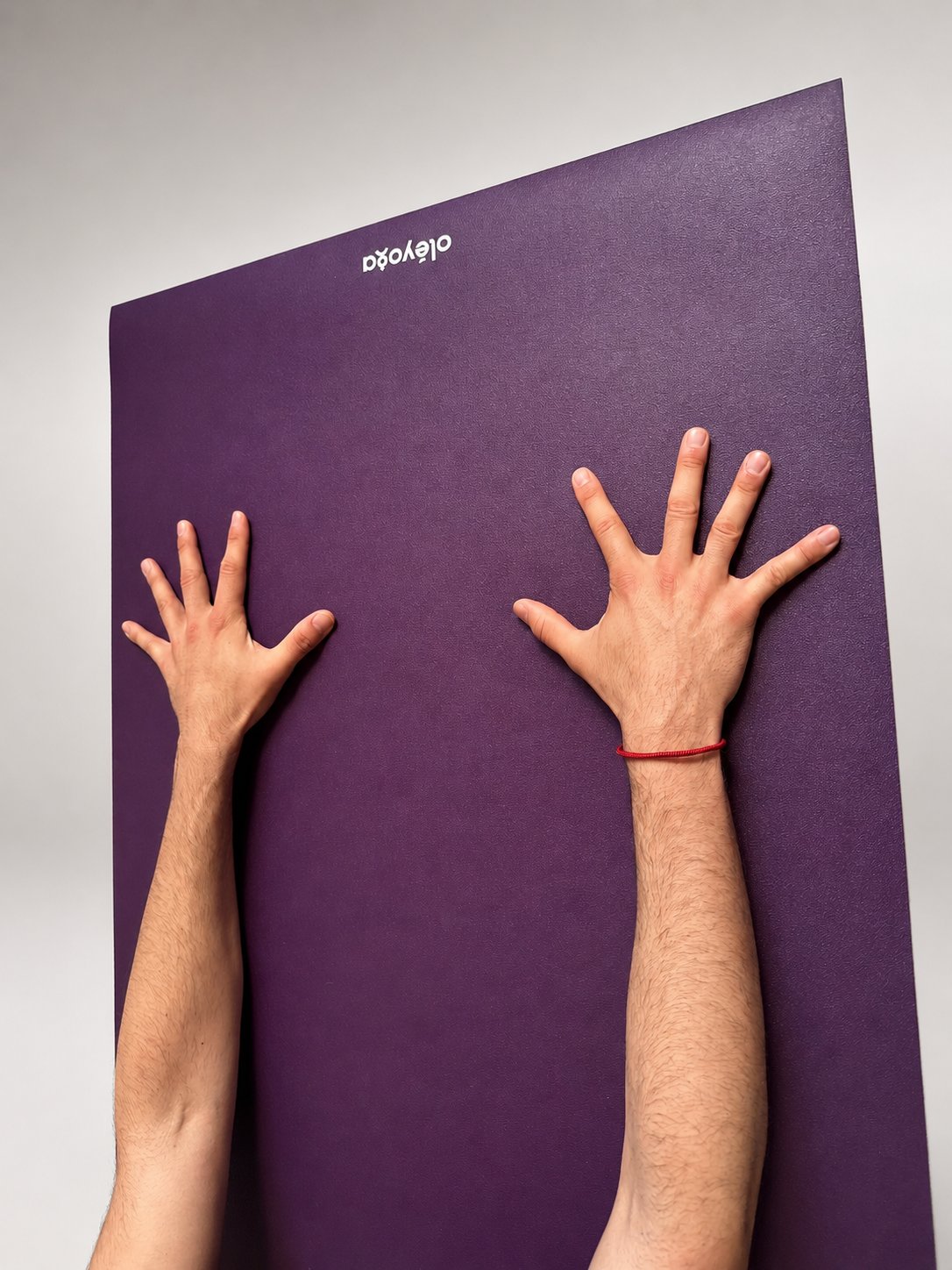
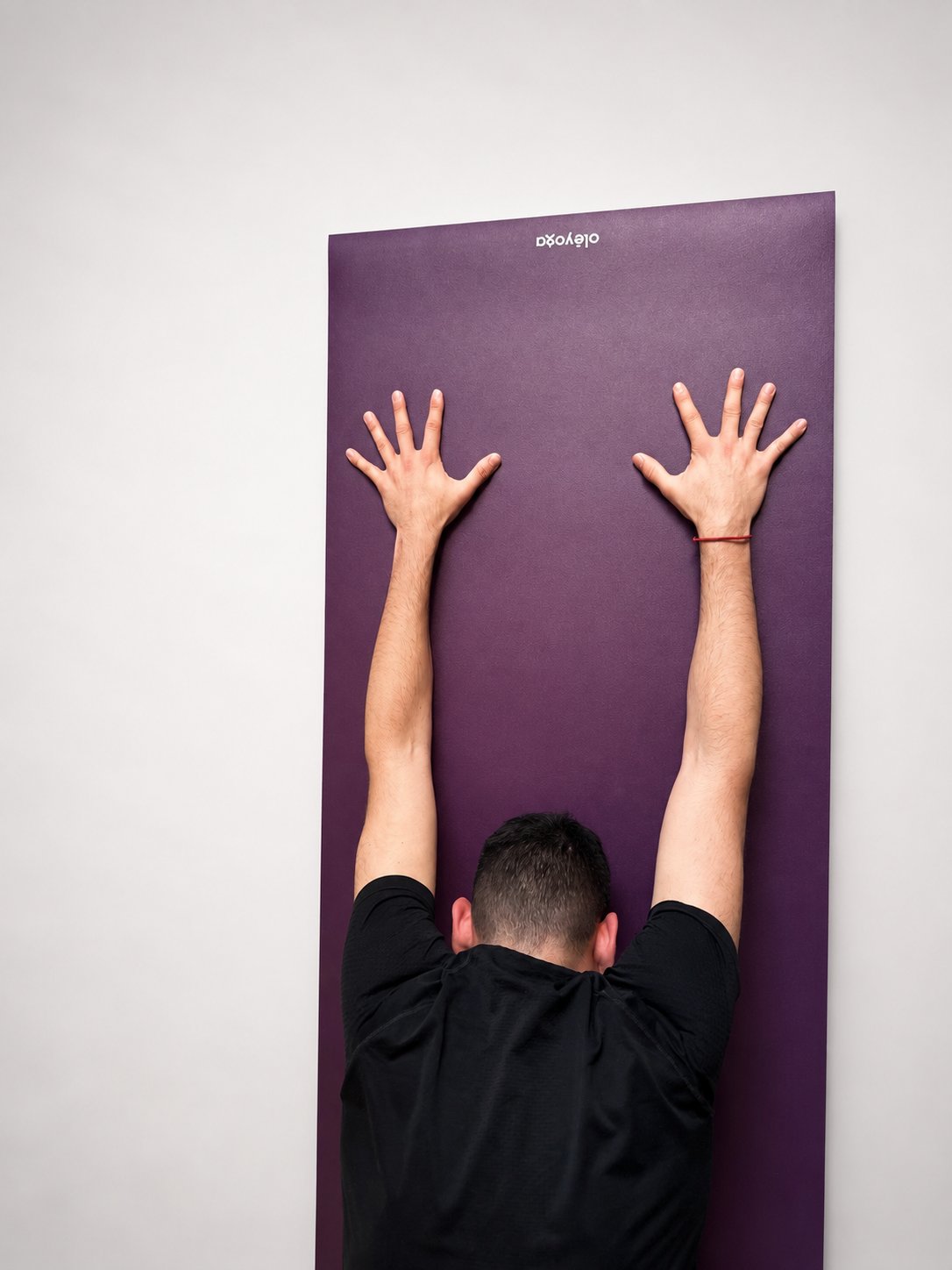
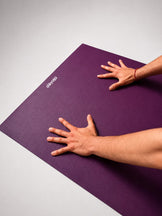
- Downward dog. The most loaded hand position in a general practice, and where sliding turns into wrist pain.
- Standing poses. The arch of the foot needs something that pushes back.
- Arm balances. All your weight through two palms, so a millimetre of slide is the whole pose.
- Kneeling poses. Where the honest answer is often local padding rather than a thicker mat.
- Inversions. The clearest case, and the one below.
The case that explains the whole page
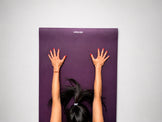
In a headstand you want two opposite things at once. Under your head you want cushioning, because it is your neck. Under your forearms you want firmness and grip, because if they slide they drift apart and you lose the base.
A globally thicker mat gives you the first and takes away the second. So the honest answer is not “buy a 6 mm mat”, it is local padding: fold the mat or put a blanket under the head, and keep the forearms on a firm surface.
That is density versus thickness again, and it is the same reasoning that applies to knees. It is also the reason we make 4 mm rather than 6, and we would rather explain it than sell you more material.
When it is not the mat
Worth saying plainly, because we sell mats and have an obvious incentive not to:
- Wrist pain with no sliding is usually load and hand position, and a teacher will fix it faster than a purchase.
- Wobbling on one side only is not a surface problem.
- Knee pain in kneeling is often solved by a folded blanket, which is free.
- Neck discomfort in inversions is a reason to see a teacher, not to shop.
The short version
If a pose feels unstable, check whether the floor is doing something before you blame yourself. Grip and density explain a surprising amount, and neither of them is thickness.
Our mat is 4 mm of natural rubber, dense and closed cell, made in Europe. See it here, or read what the material actually does in our guide to natural rubber.
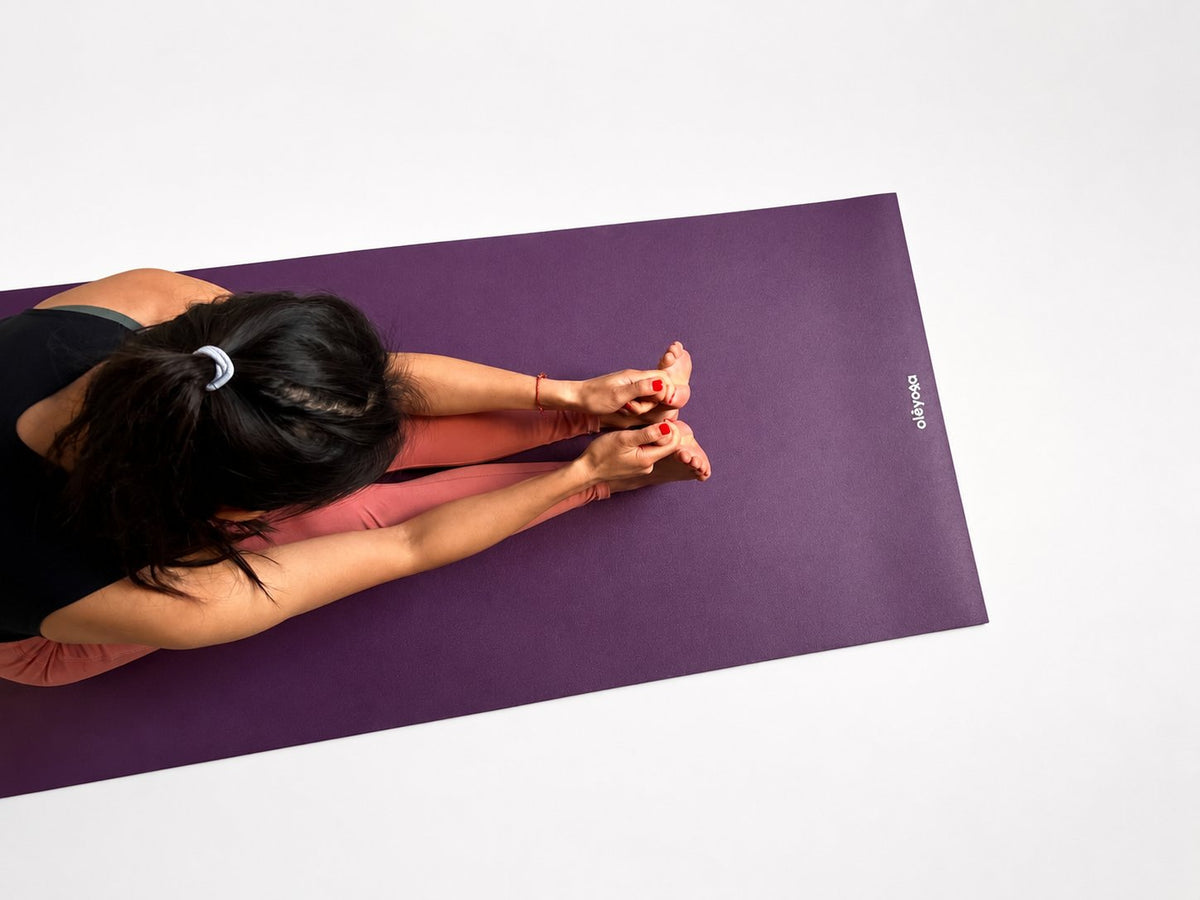
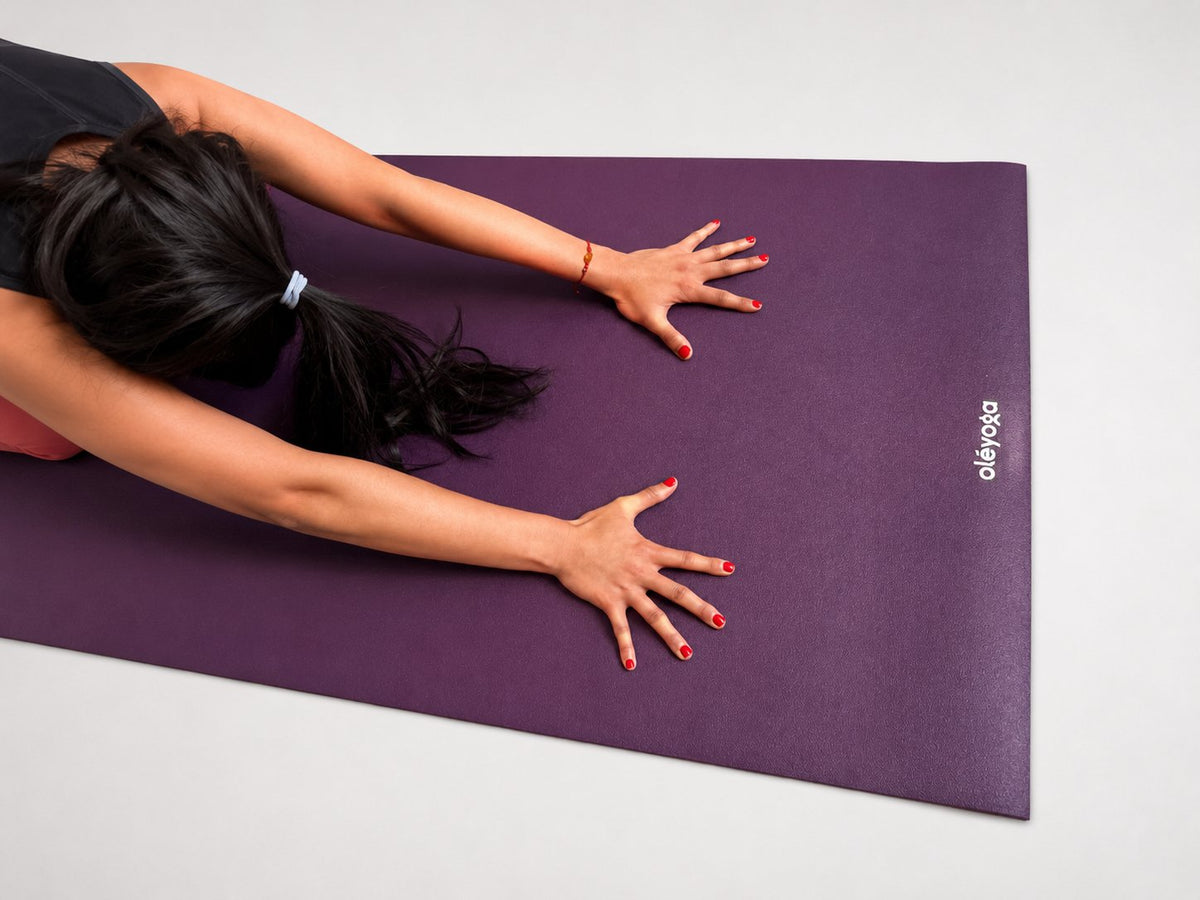
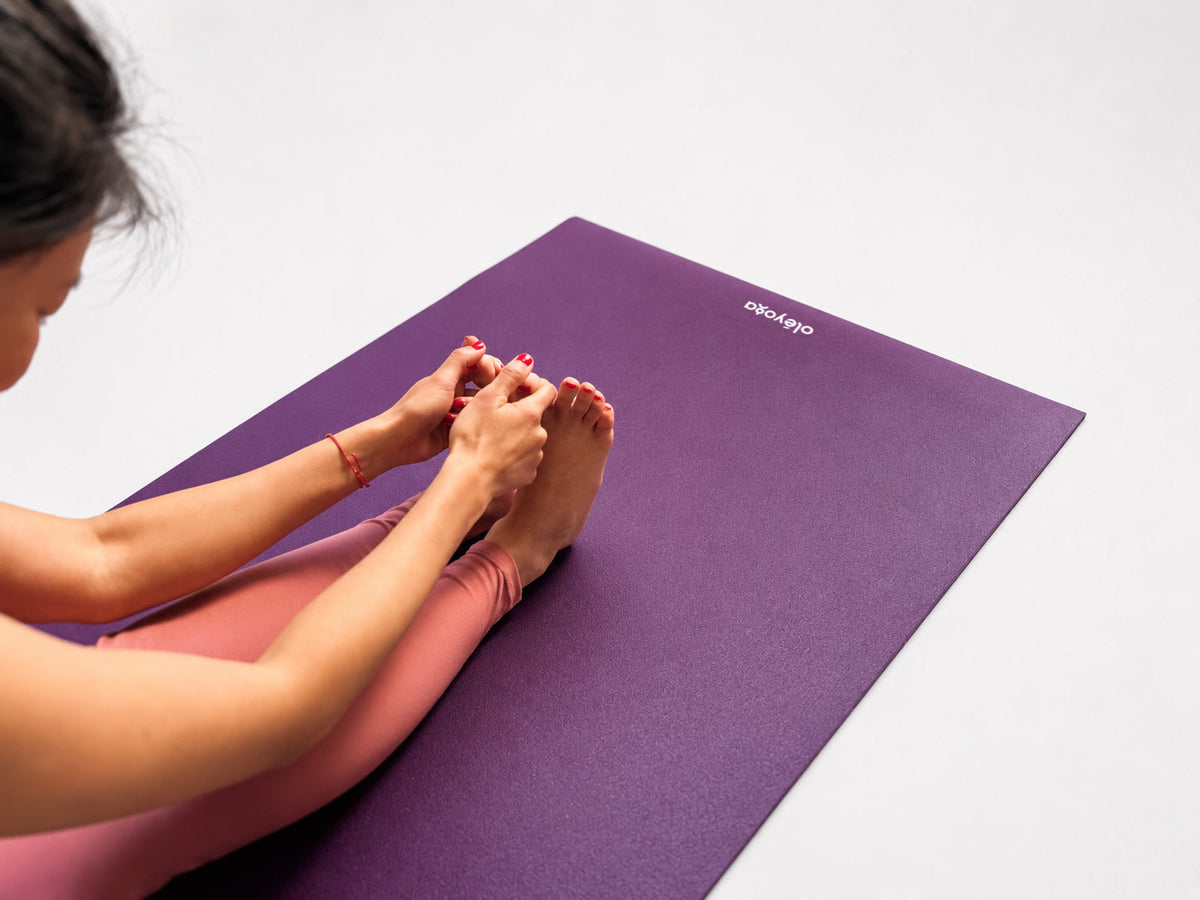
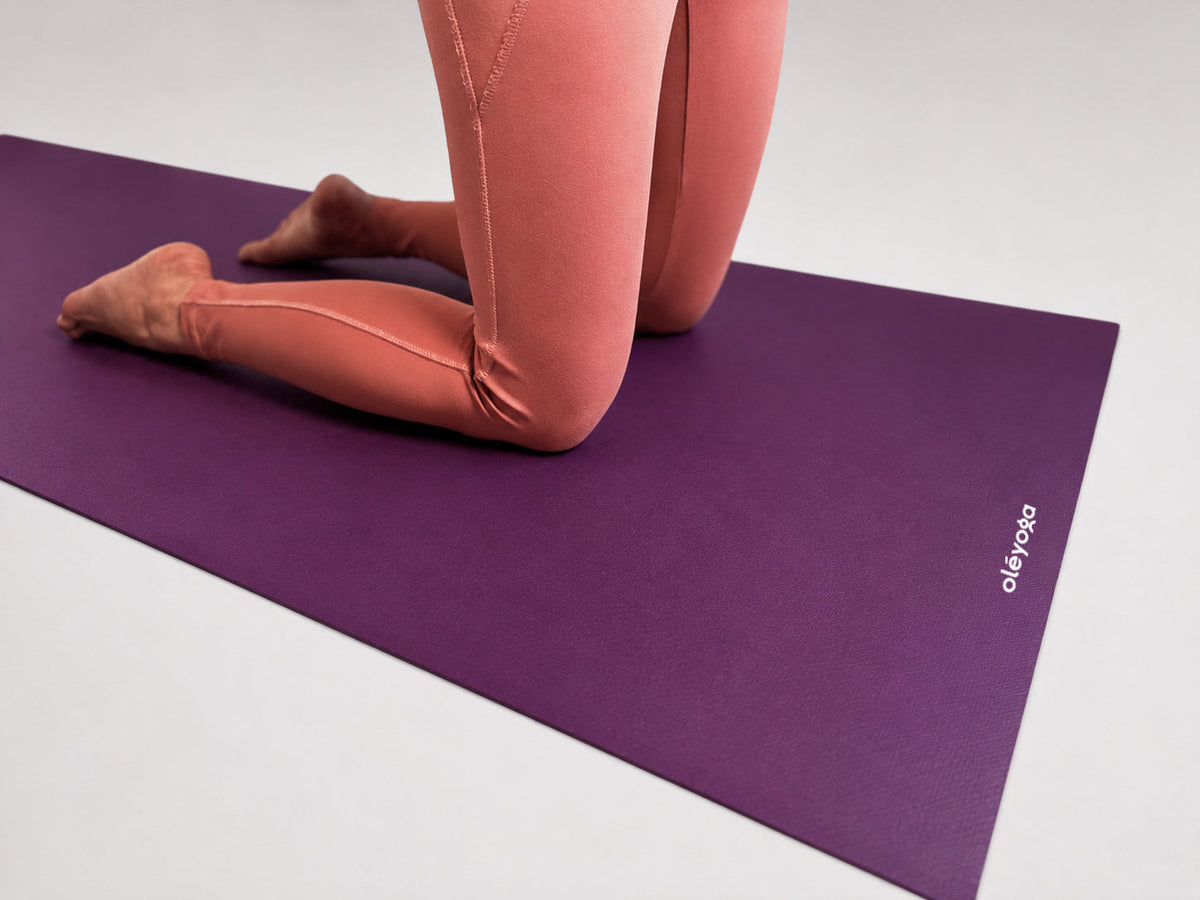
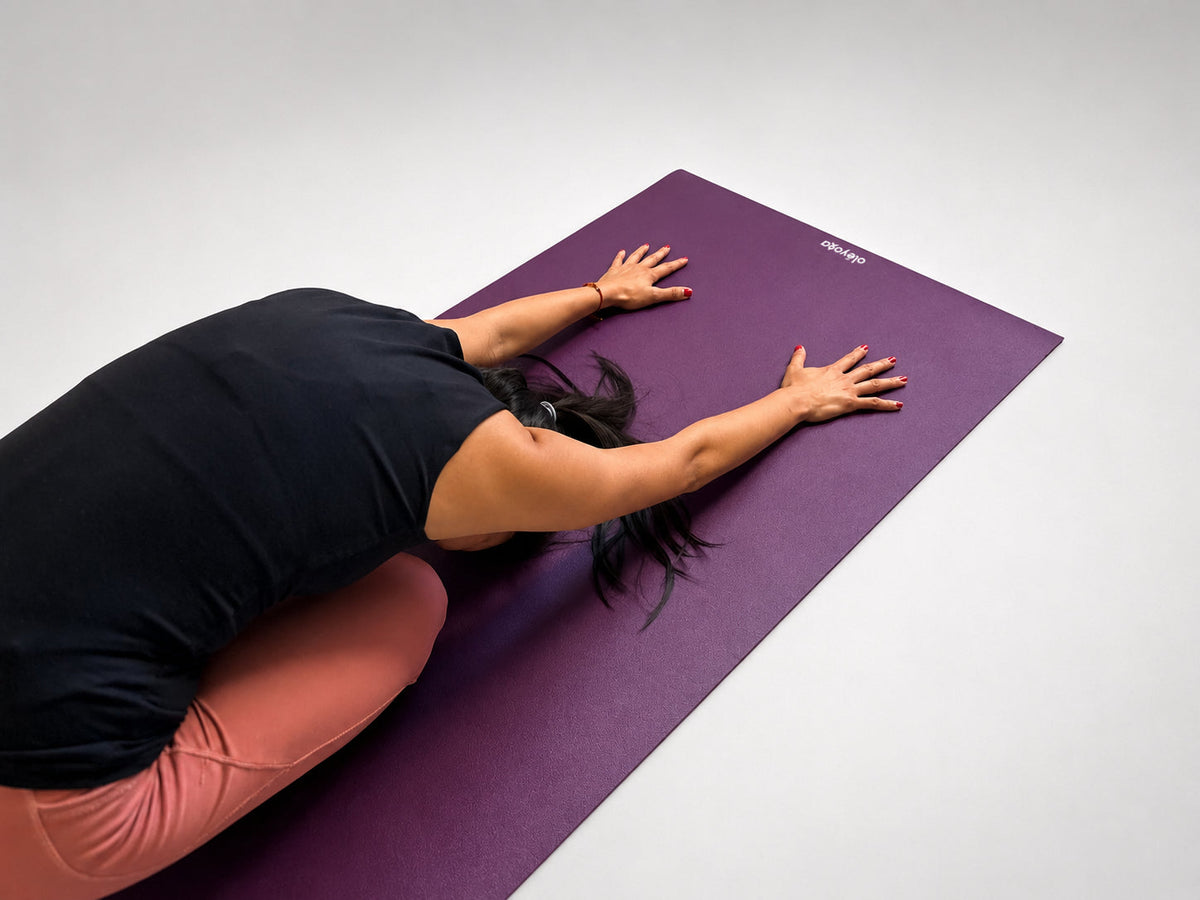
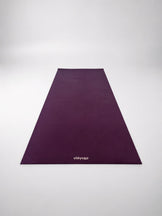
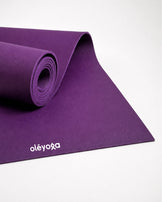
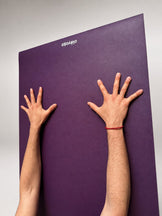
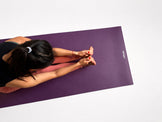
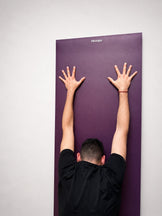
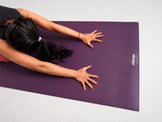
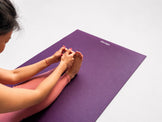
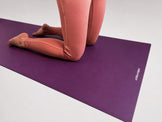
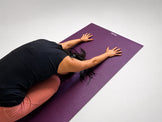
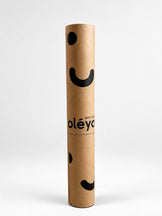
Steady natural-rubber grip from the first practice. Made in Europe · 4 mm · 1.8 kg · reversible · OEKO-TEX®.
One yoga session is all it takes to feel it: no more slipping. Made in Europe from 100% natural rubber with a non-slip technology, for a steady, mindful practice.
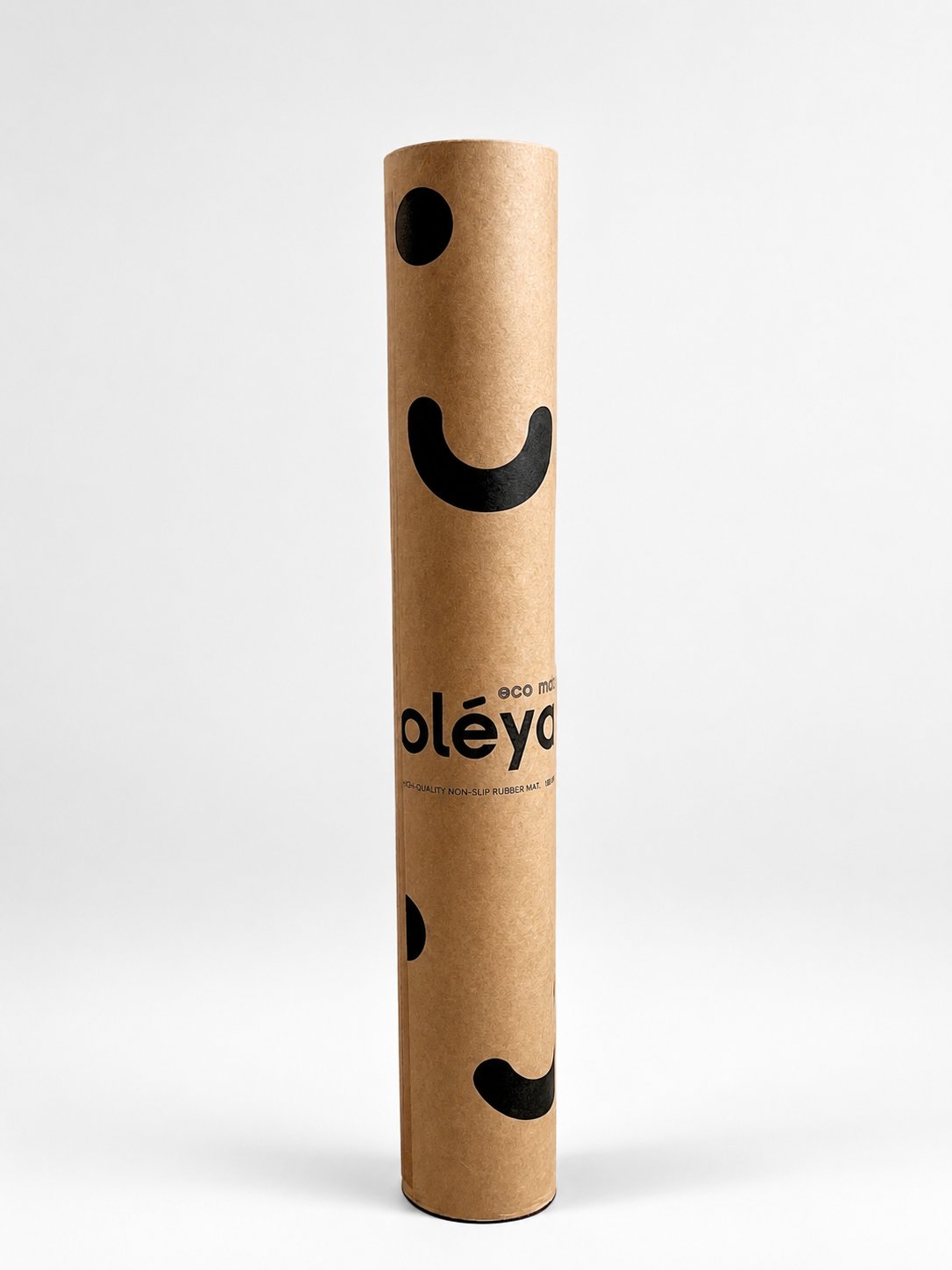
Store it. Roll it. Take it to class or home. It is reversible and weighs just 1.8 kg.
Join +1000 yogis already practicing on a more sustainable model of yoga.
More on the poses and the floor
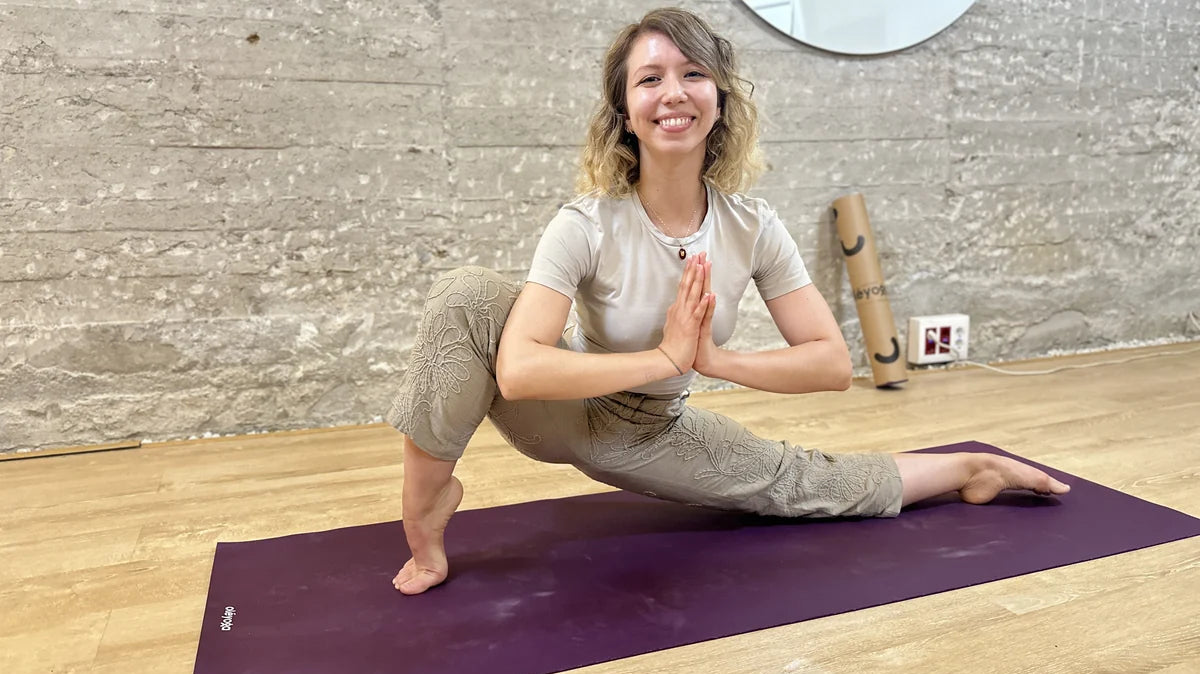
How to choose a yoga mat when you teach several classes a day
The mat you teach on has to fit the whole day: demonstrations, journeys between studios and time to clean and dry. Here is how to choose with that routine in mind.
How much does yoga mat hire cost for an event?
Worked rental calculations at €15 per mat per day, plus the transport, dates and quote details to check before budgeting for an event.
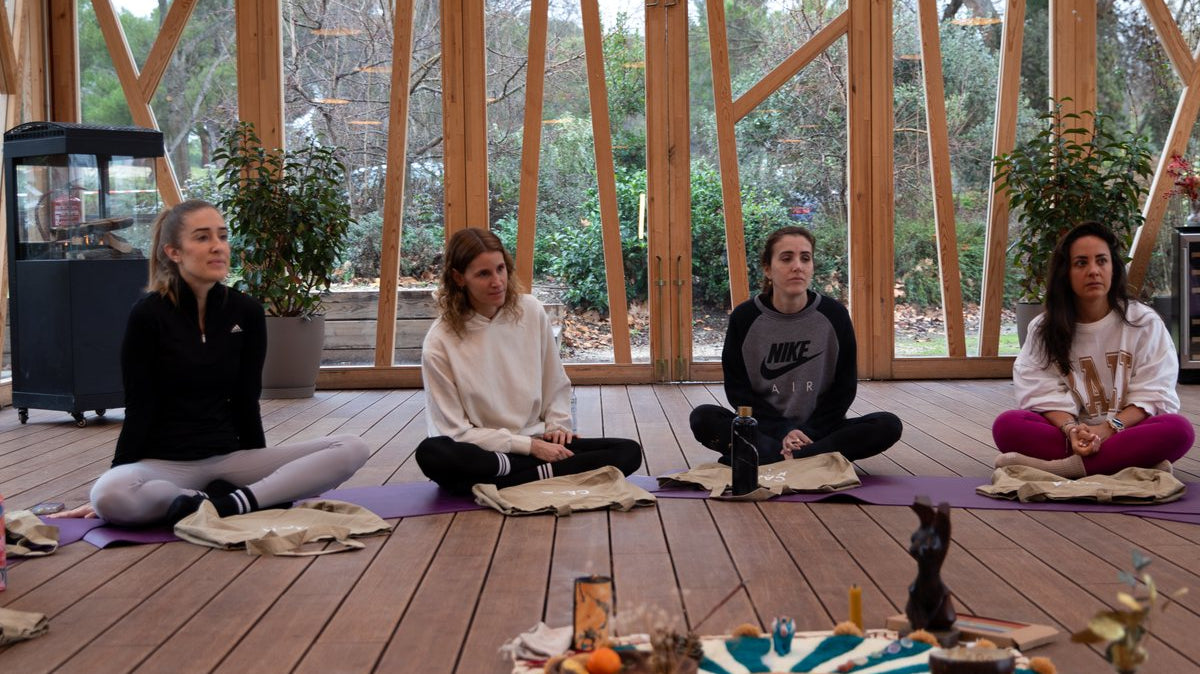
Planning a yoga retreat: mats and equipment checklist
Prepare the equipment for your retreat, from the venue inventory and group layout to delivery, care between sessions and return.
