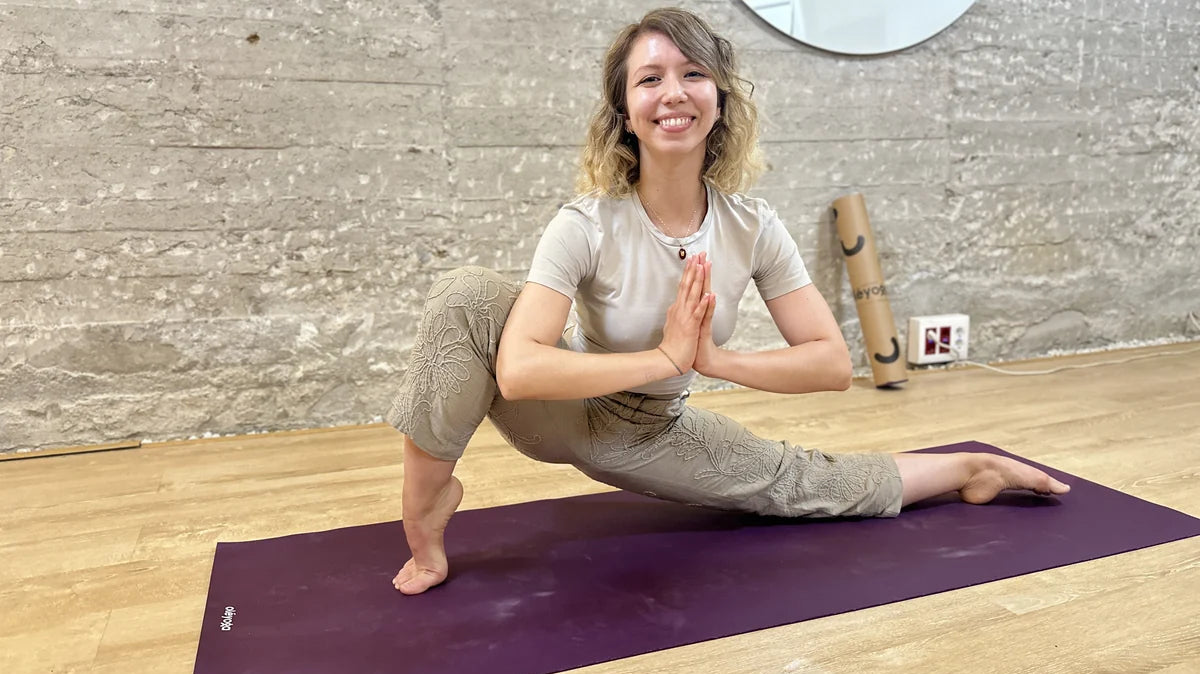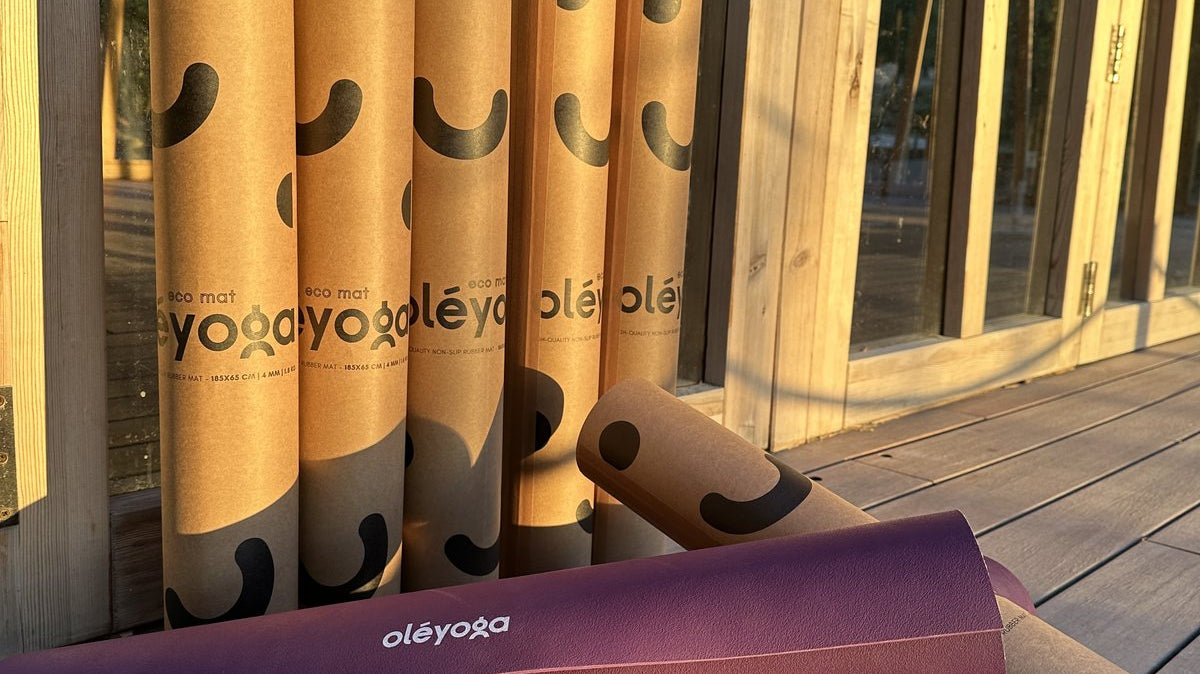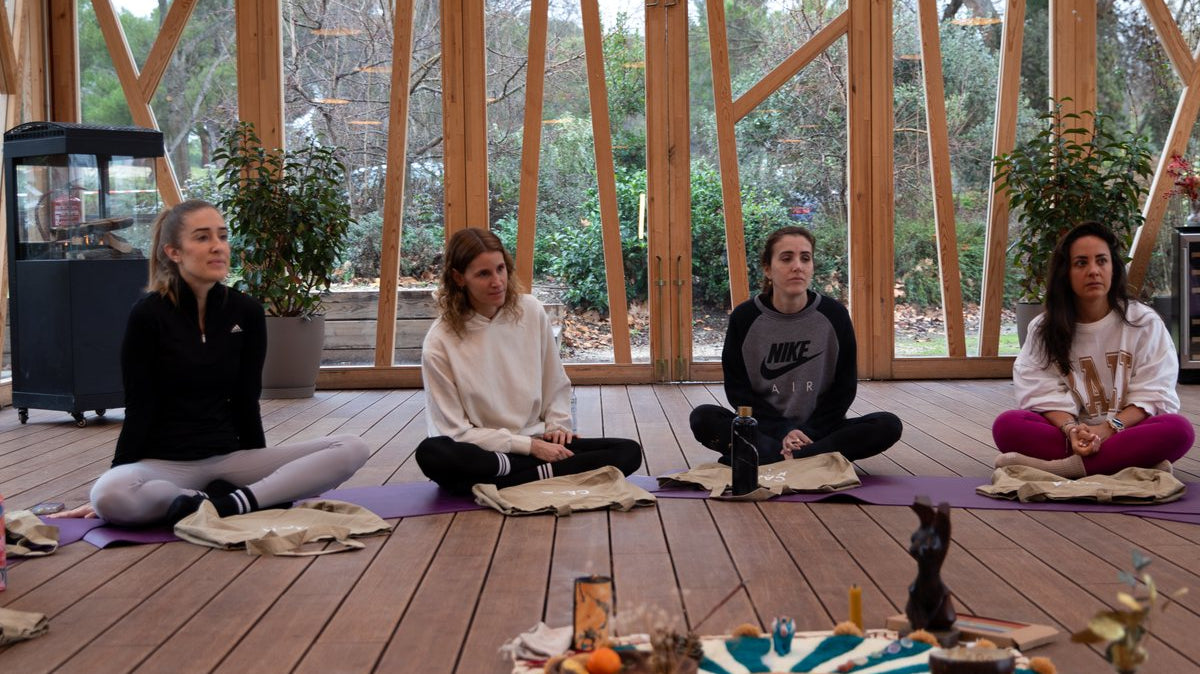

The mat you teach on has to fit the whole day: demonstrations, journeys between studios and time to clean and dry. Here is how to choose with that routine in mind.
Start with your teaching day, not a label
A mat for teaching has to work beyond your own practice. You may demonstrate standing poses in one room, carry it across town and use it again a few hours later. Before choosing, write down where you teach, how you travel, which movements you demonstrate and how long the mat can dry between classes. For the wider comparison of materials, thickness and size, see our guide to how to choose a yoga mat.
Grip: choose for the demonstrations you actually do
Think about your hands, the floor and the conditions in the room. A calm demonstration with dry hands is different from a full class in a hot room. Check that both the top surface and the underside suit your routine. Natural rubber does not remove the need to clean dust from the underside or manage moisture on the surface. If you mainly teach hot yoga, compare moisture management carefully; our guide to mats for different yoga practices explains where different mats fit.
Weight: include the journey between studios
Carrying a mat for ten minutes and carrying it across a city are different commitments. The Eco Daily weighs 1.8 kg and measures 185 × 65 cm at 4 mm thick. Those are useful numbers to compare with the space you demonstrate in and the bag you already carry. It is not an ultralight travel mat. Decide whether you need to move it every day or can leave it at the studio.
Cleaning: plan for the time between classes
A damp cloth, water and a little mild soap are the starting point for routine cleaning of the Eco Daily. Let it dry in the shade before rolling it up; avoid direct sun, oils and alcohol. If the next class starts before it has dried, that timing belongs in your buying decision. Follow the natural rubber yoga mat cleaning guide for the full routine. Routine cleaning is not a claim that a shared mat has been disinfected: for mats used by multiple people, check the venue’s hygiene requirements and material-compatible products.
What teachers say about practising on it
Alessa Akasha says: “I tried it many times while teaching classes, and I think it’s spectacular.” Ainara Goñi highlights the feel and carrying it: “I really like the texture, and I like that it’s easy to carry.” These are their personal experiences, translated from the original videos, not a universal performance guarantee. You can watch the source testimonials on our oléyoga yoga teacher program.
Before you decide
Check four practical things: the floor and styles you teach on; the weight you are willing to carry; enough space for your demonstrations; and time to clean and dry the mat. The Eco Daily is reversible and made in Europe from natural rubber. It contains latex, so it is not suitable for someone with a latex allergy. If it fits your routine, the oléyoga yoga teacher program offers 35% off the regular Eco Daily price for your selected country and currency, after review of your teaching qualification. Shipping is calculated separately at checkout.