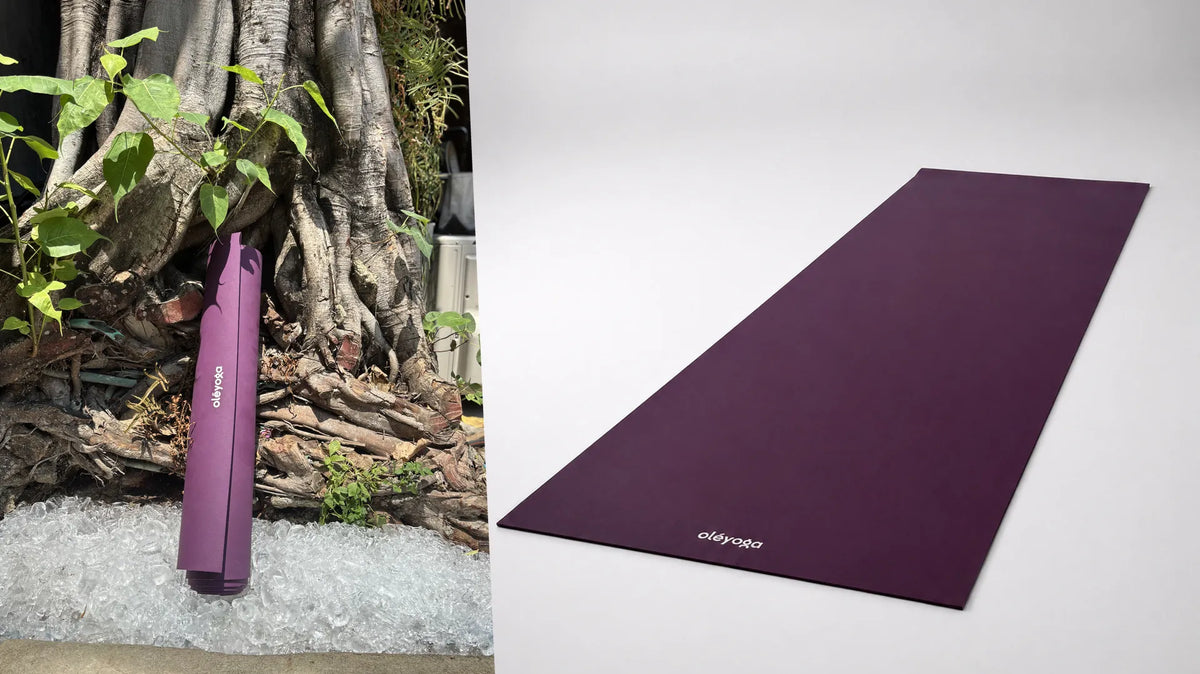

Natural rubber is renewable, tapped without felling the tree, and it breaks down at the end of its life instead of persisting for centuries. It also comes overwhelmingly from tropical monoculture plantations, and that has a real ecological cost that brands selling it, including us, rarely put on the page. Both of those things are true at once.
Renewable is a fact about the raw material. Sustainable is a claim about the whole chain, and it is a harder one to make.
What it genuinely does better
- The tree is not felled. Tapping is a shallow cut and the same tree is worked for decades. The raw material regenerates on a timescale that means something.
- It breaks down. Vulcanised rubber degrades over years. PVC does not decompose so much as fragment into microplastics over a period measured in centuries.
- It needs no plasticisers. The phthalate question that follows PVC around does not apply.
- It lasts. A durable mat replaced every five years is a better environmental outcome than a cheap one replaced every eighteen months, whatever either is made of.
Those are not small advantages, and they are why the material exists in this category at all.
The part that is rarely written down
Rubber is a plantation crop, and plantations replace something. Expansion in Southeast Asia has come substantially at the expense of forest and of more diverse agricultural systems, and the ecological consequences of converting tropical land to monoculture are reasonably well documented in the literature on tropical land use.
A rubber plantation is not a forest, and calling the material natural does not make the land use question go away. Anyone selling you natural rubber as straightforwardly good for the planet is skipping this paragraph.
Two more honest caveats:
- The freight. Rubber is tropical and the market is European. Whatever the mat, the raw material travelled. We go into what origin does and does not change in made in Europe or made in Asia.
- The vulcanising. Curing needs sulphur, accelerators and energy. It is what makes the mat durable, and it is also why it will not compost in your garden.
So how does it compare?
| Renewable source | End of life | Land use question | |
|---|---|---|---|
| Natural rubber | Yes | Breaks down over years | Yes, monoculture |
| Cork | Yes | Biodegrades | Lower, oak woodland is not cleared |
| TPE | No, petroleum | Recyclable in theory, not biodegradable | No |
| PVC | No, petroleum | Neither | No |
Read honestly, cork has the better land use story and rubber has the better grip and durability one. We compare them properly in natural rubber or cork.
How to judge a sustainability claim
- Ask what it covers. The material, the manufacturing, the freight, or the end of life. Most claims cover the first and imply the rest.
- Look for a scheme, not a word. FSC certified rubber exists. "Sustainably sourced" without a named scheme means nobody checked. We cover what each certificate actually tests in this guide.
- Check whether durability is part of the argument. A brand that talks about materials but not lifespan is selling you replacement cycles.
- Distrust the absolute. "Zero impact" on a physical object shipped across the world is not a claim, it is a slogan.
Where we stand
We chose natural rubber because on the two variables that matter most for a mat, grip and what happens at the end, it is the best available answer. We make it in Europe, which shortens the leg on a heavy object.
The most sustainable thing about any mat is how long you keep it, which is why how long it lasts and what you do with it afterwards matter more than the label on the box.
Common questions
Is natural rubber biodegradable?
It degrades over years, not in a compost heap. Vulcanising is what makes it durable and what slows that down.
Is recycled rubber better?
For the raw material, often yes. It usually comes with more filler and less grip, so it is a trade rather than a free improvement.
Is cork more sustainable?
On land use, probably. On durability and grip in dry conditions, no. And most cork mats have a rubber base anyway.
What is the single biggest thing I can do?
Keep the mat longer. It beats every material choice on this page.
The short version
Natural rubber is genuinely better than plastic on origin and end of life, and it carries a monoculture question that the word natural hides. Judge the whole chain, prefer a named scheme over an adjective, and keep the mat as long as you can.
More on the material in our guide to natural rubber yoga mats. The mat is our non-slip natural rubber yoga mat. Our own range sits there: eco-friendly and sustainable yoga mats in one material, with the chain named.